
How Can We Truly Know Anything?

How can we truly know anything? In Poetic Diction, Owen Barfield argues that meaning is not static. When a logician attempts to fix the meaning of a term, it is inevitably reduced.

Try to define the word “home,” and you are left with something that is no longer much of a home. Try to define your spouse, and before long, you no longer have a spouse.

The meaning of “home” is revealed only to the one who dwells in it poetically. The meaning of “spouse” is revealed only to the one who dwells with them poetically.

According to Barfield, meaning emerges when the poet — maker in Greek — through inspiration, stumbles upon a fresh metaphor that stirs and shifts human consciousness.

“The poet’s relation to terms is that of a maker.” — Poetic Diction

In other words, unless I look at my spouse and allow a fresh metaphor to strike me unexpectedly, I reduce her to less than she is. But if I find the metaphor — or rather, if the metaphor finds me — the meaning will be revealed as a felt change of consciousness.

Modern consciousness recognizes only static meaning because it is bound to a particular lens — the lens of non-participation. That is why the modern world has so little meaning: such a view is inherently reductive.

It assumes that meaning can be grasped by definition, captured within an affixed description, as though it existed independently of the one who perceives it.

But there is no such thing as fixed, static meaning. The Logos of a thing is revealed only in between — in the living relation between myself and the thing. Meaning arises as I participate in it — through inspired metaphor.

The word “meaning” itself has a curious etymology. It comes from the Old English mǣnan, which means “to intend” or “to signify.” Surprisingly, the noun mean (as in Golden Mean) comes from a related Old English term “gemǣne.” Both mǣnan and gemǣne trace back to one common Proto-Indo-European root: mei- / moi-, which means to bind, unite, exchange, have in common.

In other words, meaning arises within a certain means — within a medium, in the shared space, in-between. Signification is revealed only through participation.

Barfield quotes Aristotle:

“The making of metaphors is by far the most important; since this alone does not involve borrowing from somebody else and is [therefore] a mark of genius; for to make a good metaphor is to contemplate likeness.” — Poetic Diction

A good metaphor is inspiration itself — it comes directly from the Spirit revealing the Logos. True metaphor doesn’t borrow anything from anyone; through imagination it ascends directly to God and is granted the gift of Mercurial speech.

Then, it strikes us with a magical wand of sound and shifts our consciousness to contemplate True Likeness. At that point, we no longer need definitions — we know.

How Did Aristotle View Matter? The Forest Beneath All Forms

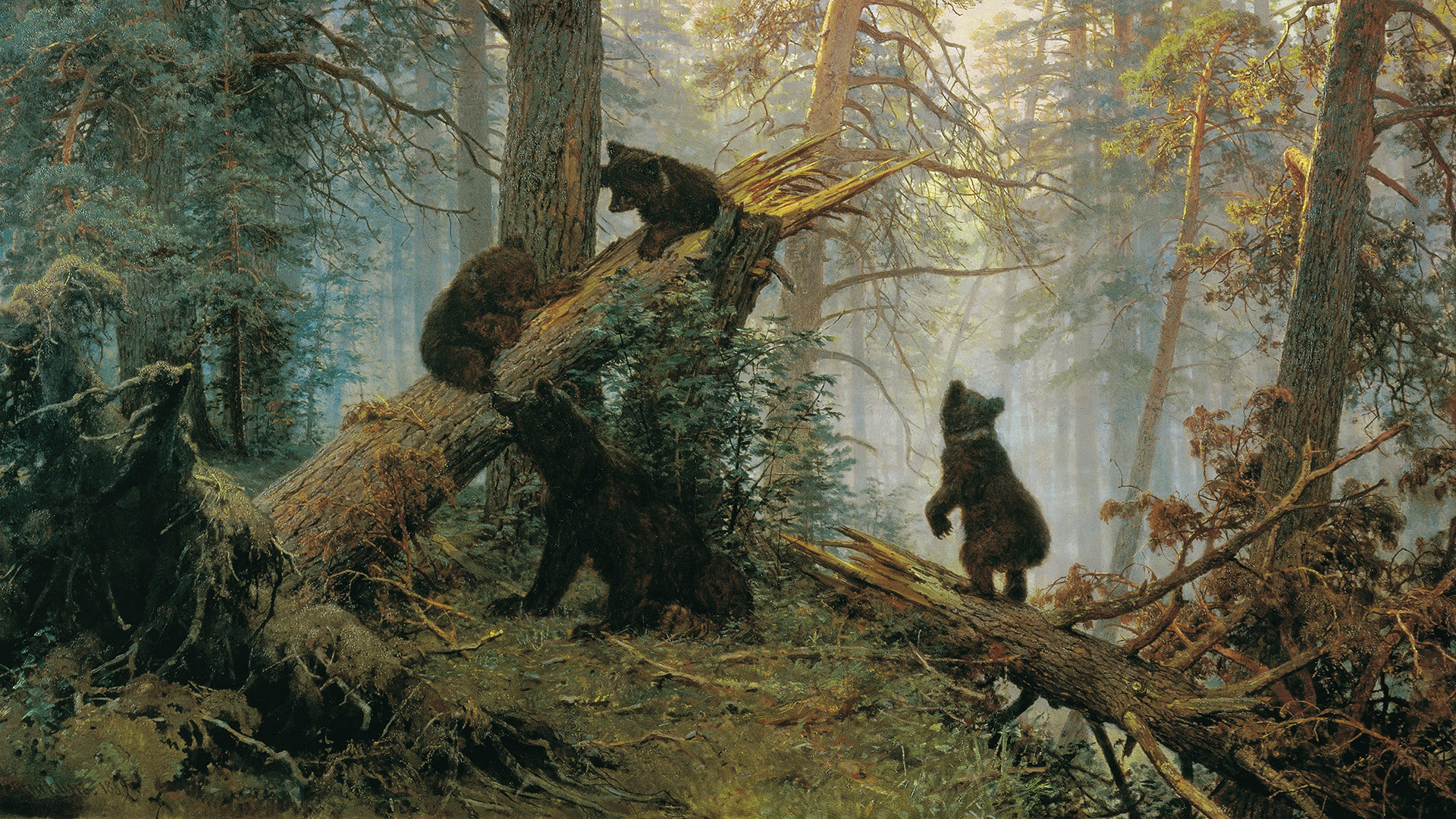
How did Aristotle view matter? Aristotle’s main Greek word for matter is ὕλη (hýlē). Interestingly, hýlē originally meant wood, timber, or forest — the raw stuff one builds with. Why would Aristotle choose such a word to name the underlying constituent of all things?

What does wood have to do with matter?

For Aristotle, hýlē represented the potential — not actuality.

“Matter (hýlē) exists potentially, while form (eidos) exists in actuality.” — Metaphysics

In other words, hýlē is matter as potential — something not yet formed. This may well be the reason why the word was later translated into Latin as materia, derived from mater (“mother”). Originally, however, materia also referred to wood or building material, especially timber taken from a tree.

The proximity of materia to mater (“mother”) is not accidental: both hýlē and mater point to that which gives birth, nourishes, and brings forth. For Aristotle, wood is the most fitting metaphor for potentiality.

Just as a mother brings a person from potentiality into actuality — not by imposing a shape from without, but by allowing form to emerge from within — so wood (hýlē) represents something waiting to be shaped. Matter is not dead or mechanical, not a mere standing reserve.

It is something living that grows and reveals its potential in various forms. The ancients saw matter not as something we shape but as something that shapes us. Wood is not something we grow; it is something that grows us. That is why the first thing God did after creating Adam and Eve was to plant a garden in the East.

God knew that humans could realize their potential only among living things. It was the Garden that shaped Adam, not vice versa. The Garden was the womb that would shape Adam into the person he was made to be. As Adam tended the Garden, the Garden tended Adam. Adam grew the Garden, and the Garden grew Adam.

Humans grow only in the garden — that’s why we have kindergartens. We must have “adult-gardens” as well. That is what Elder Amphilochios (Makris) of Patmos must have felt when he told people, after receiving their confession, that their penance was to plant a tree.

Curiously, older descriptions of Patmos note that the island historically had very few trees. Today, there are areas of pine, tamarisk, cypress, mastic, and other trees growing naturally and in groves. The island is turning into a garden.

If you want to grow, you must grow something. Resilience to evil comes to those who, like hobbits, “love all things that grow.” The only way to overcome evil is to be rooted in the soil of the earth — which is “deeper magic.”

As St. Amphilochios used to say to his many disciples:

“Do you know that God gave us one more commandment, which is not recorded in Scripture? It is the commandment “love the trees.” When you plant a tree, you plant hope.”