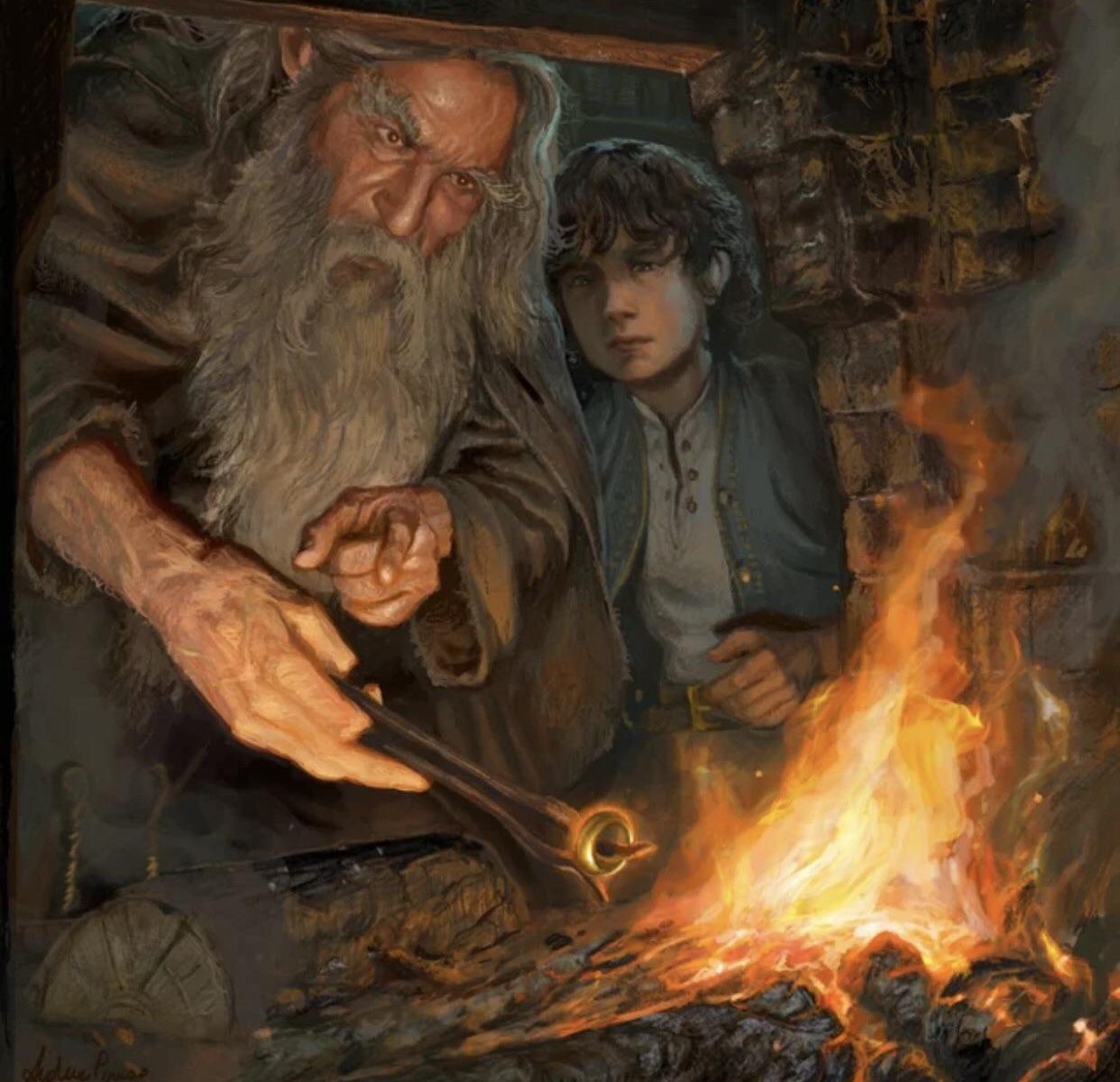
Why Did Tolkien Cut Out All References to Religion in The Lord of the Rings?

Why did Tolkien cut out all references to religion in The Lord of the Rings? Tolkien once wrote to his friend Father Robert Murrey:

The Lord of the Rings is of course a fundamentally religious and Catholic work; unconsciously so at first, but consciously in the revision. That is why I have not put in, or have cut out, practically all references to anything like ‘religion’, to cults or practices, in the imaginary world.”

This seems to be the only way to create something intrinsically religious — cut out all references to religion. Paradoxically, the surest and quickest way to ruin religion is to mention it. True religion has very little to do with cults or practices. It has everything to do with one’s state of being.

When religion is spoken of, it usually disappears; when it remains unuttered, it always transpires. No wonder there is no temple in the New Jerusalem: “And I saw no temple in the city” (Revelation 21:22). When God is all in all, everything is a temple. The temple is not a place but Divine Being present in all things.

When God is all in all, you no longer need a source of light — neither the sun nor the moon. Since God shines through everything, everything becomes a source of light.

C.S. Lewis once called this phenomenon donegality. During his visit to County Donegal in Ireland, he was struck by the unique feel of its landscape. He coined the term to describe the distinctive atmosphere or mood that gives a place — or a narrative — its unmistakable feel.

Donegality is when a mystery becomes lucid by remaining unspoken. It cannot be pointed to directly, yet it permeates everything. It is never the subject of the story but some ineffable mood in which the story is soaked.

When dogmas speak, donegality remains silent. When dogmas fall silent, true religion speaks the unutterable.

For example, Eru Ilúvatar is never spoken of in The Lord of the Rings, yet the Music of Ilúvatar is heard in all things. In Lothlórien, this transcendence becomes almost palpable:

“Frodo felt that he was in a timeless land that did not fade or change or fall into forgetfulness. When he had gone and passed again into the outer world, still Frodo the wanderer from the Shire would walk there, upon the grass among elanor and niphredil in fair Lothlórien.”

Lothlórien was permeated with the Music of Ilúvatar — the unspoken, ineffable harmony that made all things alive. There is no temple, because worship is not something the Elves do; it is something they are.

By attuning themselves with this ineffable Music, they become “it” — part of it. They become keenly aware of its presence in all things, and worship unfolds of itself, ceaselessly. Whatever they touch, begins singing with the primordial Chant.

That’s why all they make becomes “magical.” As the leader of the Elves explained to Pippin who asked him whether the cloaks they received were magical:

“They are Elvish robes certainly, if that is what you mean. Leaf and branch, water and stone: they have the hue and beauty of all these things under the twilight of Lorien that we love; for we put the thought of all that we love into all that we make.’”

In other words, whatever the Elves do becomes “magical” by virtue of the land’s unending Worship and their love of it. Explicit religion would shatter this invisible yet all-pervasive Chant that makes all things enchanting.

In On Fairy Stories, Tolkien explains that the art of the Elves is Enchantment — not magic proper, for that is the domain of the Enemy.

“…the more potent and specially elvish craft I will, for lack of a less debatable word, call Enchantment.”

The true religion of heaven is unspoken — yet, it is heard, seen, smelled, tasted, and touched in all things because all things exist “in Chanting.” It is in this Chanting that they have their being.

When the Elves participate in the Chanting, whatever they do becomes Enchantment. And Enchantment is true Art that the Enemy has no power over.

What is the True Significance of Pilgrimage?

What is the true significance of pilgrimage? “Where are we really going? Always home.” — Novalis

The history of mankind is the history of leaving and returning. We always go there and back again. Never only there — always there and back again.

Somehow, we all know that if we stay at home, without The Adventure, we will never become who we are. We need the Road, the Way. We must find the “golden child” within — using Jung’s archetype. The road goes ever on and on, down from the door where it began, and it is a road “there and back to yourself.”

Any road can become a way back to yourself — if you recognize it as The Way, the Tao. People step out the door because of an inexplicable yearning, an inner urge. Whether I go to Tahiti, Yellowstone, or a park across town, I don’t really go to a place — I go to a person: back to myself.

Hermann Hesse wrote in The Journey to the East:

“Each man had only one genuine vocation — to find the way to himself.”

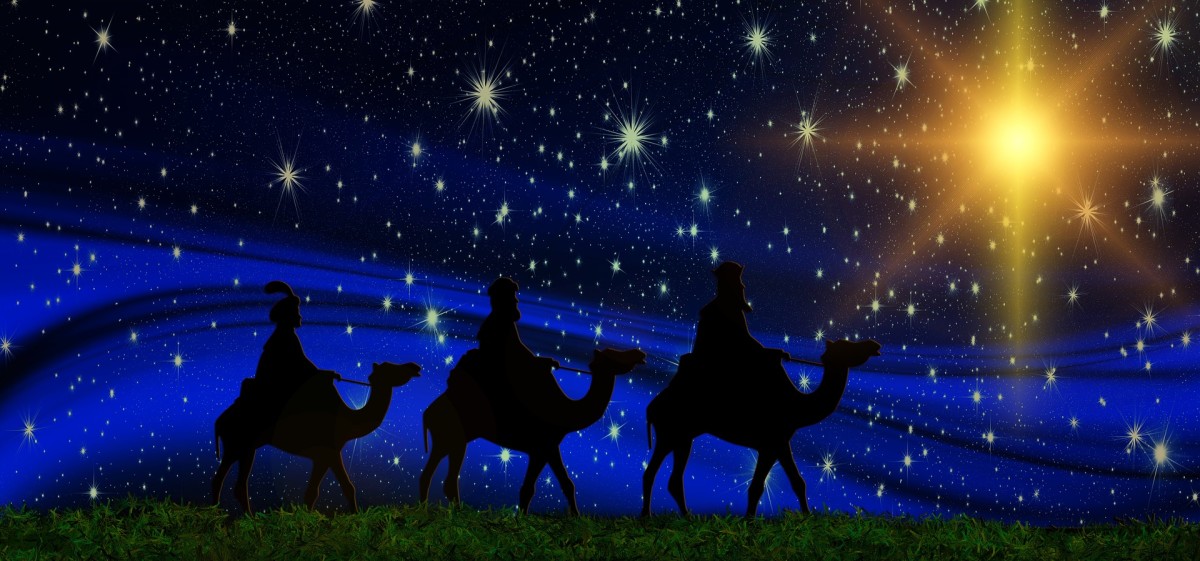
In the wake of World War I, Hesse became keenly aware of pilgrimage as the only way a person can remain sane in an insane world. We are all pilgrims, following yonder star. We caught a glimpse of it amid the fray, chaos, confusion, and disillusionment of our hope-shattering times.

It calls us by its otherworldly light to go and look for the Child. But how do you tell of such a journey? Hesse’s allegory The Journey to the East captures his uncanny experience of pilgrimage to the “Land of the Morning Star” — his quest to remain spiritually alive in a world gone mad.

What do we need in order not to go mad with the world, which Jung described as undergoing a “collective psychosis”?

According to Hesse, we need to rememberTo recall the star we once saw and set out on pilgrimage. The way to the star is The Way. There, on the boundless stretches of time and space, we will encounter the real and the mythical alike. We will meet Melchior, Balthasar, and Caspar — the Magi — who saw the star too and embarked on the same journey.

“For our goal was not only the East, or rather the East was not only a country and something geographical, but it was the home and youth of the soul, it was everywhere and nowhere, it was the union of all times.” — Hermann Hesse, The Journey to the East

The Pilgrimage is something we yearn for and yet fear the most.

“It’s a dangerous business, Frodo, going out your door. You step onto the road, and if you don’t keep your feet, there’s no knowing where you might be swept off to.” — Bilbo Baggins

Bilbo secretly longed for The Journey. Gandalf’s nudge out the door was not an act of forcing — it was the awakening of Bilbo’s own dreams: the desire to go there and back again. Bilbo had glimpsed “the star” before. He remembered its mysterious call — and he hated himself for not following it.

Deep down, he knew that the worst tragedy under the sun is not to go on a journey.

Hesse writes:

“Once in their youth the light shone for them; they saw the light and followed the star, but then came reason and the mockery of the world; then came faint-heartedness and apparent failure; then came weariness and disillusionment, and so they lost their way again, they became blind again. Some of them have spent the rest of their lives looking for us again, but could not find us. They have then told the world that our League is only a pretty legend and people should not be misled by it.”

To see the Star is a dangerous thing — it calls us back to ourselves. The world tells us it is “a pretty legend,” nothing more, but the heart tells a different story. The heart yearns for nothing less than to become a Pilgrim and join the League.