

What Is the Best Way to Start a Day?

What is the best way to start a day? A person once asked a monk, “What is the difference between a monk’s day and an ordinary person’s day?”

The monk answered, “When does your day begin?”

The person replied, “When I open my eyes in the morning, of course.”

The monk said, “It should begin when you close your eyes in the evening.”

“If you begin your day by opening your eyes, your mind is inevitably filled with activity. But when you begin your day by closing your eyes, your mind is inevitably filled with the surrender of control.”

If we begin our day by recognizing that we control nothing, our experience of the day will taste vastly different from what it would taste like if we began by believing we have some control.

If we begin our day with poverty of spirit, we will reap the blessedness of the poor in spirit.

If we begin our day with richness of spirit, we will reap the curse of the rich in spirit.

The monk also added, “If we begin our day by spending one-third of it in complete passivity, our activity throughout the rest of the day will be blessed indeed.”

That is why the week begins on Sunday — the Sabbath — a day of rest and inactivity. Curiously, the English word “week,” from the Middle English weke and Old English wucu, means “a turning point in a cycle” — a point of breaking.

The week starts when I break — literally and figuratively. When I come to the end of myself and release all control. At that breaking point, I begin to resurrect — taste true blessedness.

The most blessed activity is born from the most blessed passivity. The most cursed activity arises from the absence of blessed passivity.

“The mind is most creative when it knows nothing.” — Eckhart Tolle

Waking up each morning is a resurrection from the dead. One-third of our day is spent in death: we let go, we break, we fall into nothingness, entrusting our spirits fully to Another.

Then, suddenly, this nothingness changes the taste of life. As Madame Guyon writes:

“In this state of Resurrection comes that ineffable silence, by which we not only subsist in God, but commune with Him, and which, in a Soul thus dead to its own working, and general and fundamental Self-appropriation, becomes a flux and reflux of Divine Communion.”

Every day and every week must begin with breaking, which is the only way to experience wholeness.

The taste of life always strikes us at a breaking point — when some unimaginable power pulls us out of sleep and opens our eyes to see the world anew.

On December 22, 1849, Dostoevsky wrote to his brother Mikhail about what he experienced after his mock execution:

“…no more than a minute was left me to live. I remembered you, brother, and all yours; during the last minute you, you alone, were in my mind, only then I realised how I love you, dear brother mine! Finally the retreat was sounded, and those tied to the pillar were led back, and it was announced to us that His Imperial Majesty granted us our lives.”

When we wake up in the morning, our death sentence has been revoked. We have been brought back from the dead. Suddenly, everything tastes new.

We look at our brother and feel a love we never knew before.


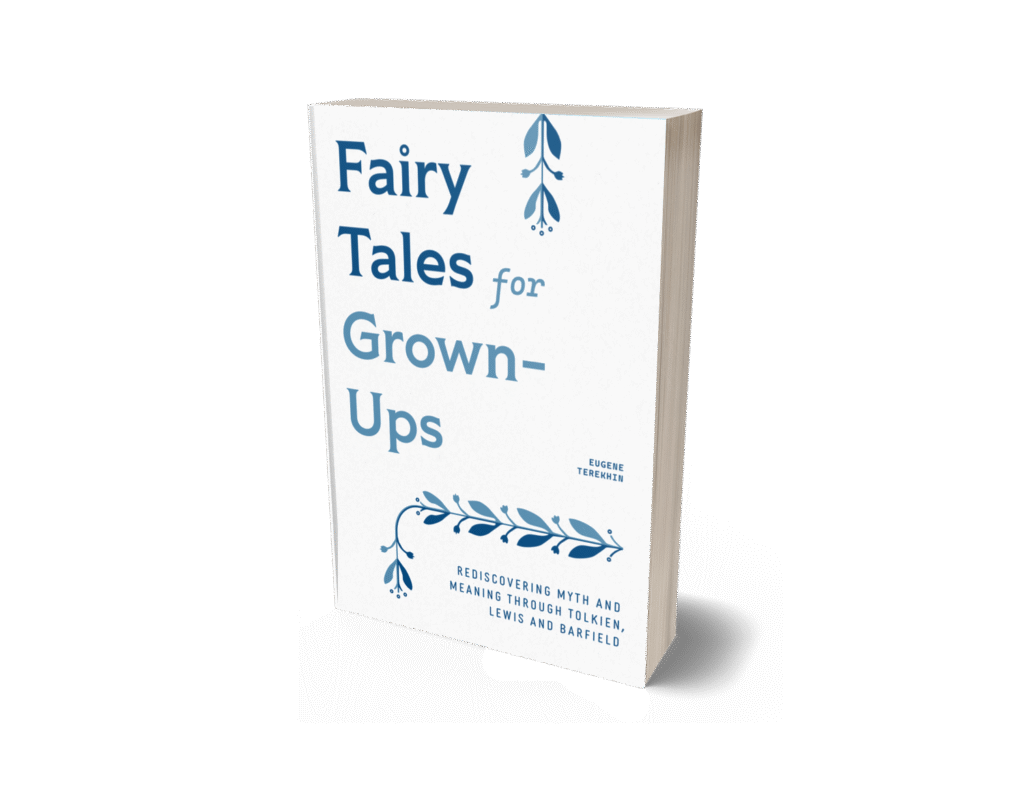
Read more about the taste of resurrection in my book:
What is the Origin of the Word Data?

What is the origin of the word data? What is data? Here’s a definition I found online:

“Data is raw, unorganized facts, figures, symbols, or observations that represent details about events, objects, or phenomena. As the basic, unprocessed units of information, data can be numerical (quantitative) or descriptive (qualitative). Once collected, structured, and interpreted, data is transformed into valuable insights used for decision-making.”

However, if you look up the etymology of the word data, you will see that it means “something given” — a gift. It comes from the Proto-Indo-European root do-, “to give,” and belongs to a whole family of words related to giving, such as donation, dowry, Pandora, Theodore, and even дар (gift) in Russian.

The difference between the modern understanding of data and its original meaning is subtle but telling. In our time, data is all about collecting information, as if it were simply there for the taking. In the past, however, data meant a gift — and gifts must be recognized.

For example, when I look at my legs, I can collect all sorts of data about them, but that doesn’t necessarily mean that I have recognized them as a gift. Recognizing a gift is always a matter of awareness, not calculation.

Even if I collect all the “data” about my legs — length, weight, width, and so on — I still don’t truly know what they are. I only know what they are when I become aware that they have been given.

“When we were children we were grateful to those who filled our stockings at Christmas time. Why are we not grateful to God for filling our stockings with legs?” — G.K. Chesterton

My legs are a given — datum. But my knowing what they are is not a given — not datum. Properly speaking, data is a gift recognized. All measurements and calculations made prior to this recognition diminish knowledge rather than increase it.

True knowledge is born from the awareness of a gift. The modern approach to data leads to the diminishment of true knowledge because it is not rooted in wonder — the awareness that we possess nothing yet have been given everything. Without awe and wonder, data becomes anti-knowledge.

What is anti-knowledge? It is a husk of knowledge, devoid of substance. Unless I recognize the gift of legs in my stockings, I live under the illusion of knowing. To know my legs is to experience the awe of having them. That is true knowledge — true data.

True data grants joy, not control or power. When I become aware of the gift of legs, I am struck by the joy of walking on them. If I believe I possess them by right, I will feel no joy. Joy is the overflow of awareness that I dwell within a gift.

Data is a given, but we cannot take it for granted. If we do, we fail to understand that it has been granted. Awareness of a gift is the only antidote to taking things for granted.

We speak of “harvesting” data, “processing” data, “owning” data. The language reveals the posture: reality is no longer a gift but a standing resource. And once reality becomes a resource, wonder goes. What remains is manipulation.

But gifts cannot be manipulated without ceasing to be gifts. To know the meaning of data we must turn and become like little children. A child knows their legs not by measurements in inches, but by the measure of delight in using them.

A knower is a lover, not a consumer. A lover doesn’t stand outside and analyze; he stands within and is astonished.

Recovery of true knowledge begins with a conversion of attention — a return to wonder. It’s all about learning to master thinking through thanking.