
What Are the Long-Term Consequences of AI?

What are the long-term consequences of AI? They say: “If you meet the Buddha by the road, kill him.”

It simply means that if you worship any fixed idea outside your immediate experience, it is an illusion — destroy it. Don’t worship the map; walk the path. If something or someone hinders your “direct seeing,” let it go.

In an article I found on LinkedIn titled “Every Company Now Sounds Like ChatGPT— and That’s the Biggest Brand Opportunity in a Decade,” the author says that an analysis of 73 corporate documents has revealed the consistent use of the same syntactic constructions across multiple brands. Brands begin to sound the same:

Language models are trained to produce the statistical average of everything ever written, so when enough companies route their communications through them, every company starts sounding like the average of every other company.

Ahrefs analyzed 900,000 new web pages and found 74% contained AI-generated content. As more and more brands use ChatGPT, more and more brands begin sounding like ChatGPT.

The author concludes: “Today, sounding different becomes the rarest competitive advantage a company can have. The company with real personality, earned conviction, and concrete specificity stands out like a bonfire in a field of flashlights.”

AI makes you sound like AI — and makes you lose your voice. When we allow AI to speak for us, we become mute. When we meet a new person, we instinctively look for something unique about them. We call a person interesting only if they have a voice — not when they sound like everyone else.

Having a voice means to see and describe things in a way no one else does. I don’t want my friends to sound the same today as they did yesterday. If they are alive, they must have new experiences today worth sharing. And when they do, it makes me come alive too.

When we meet someone who sounds average, we quickly forget what they say. Yet we know — almost instinctively — that there are no average people. If someone sounds average, it simply means they have lost their voice: for some reason, they don’t speak from their own experience.

Unlike AI, we have direct experience. We are not merely a database of theoretical knowledge. We have cooked an omelet a thousand times — and we know how to make it, not as information, but as an embodied practice. And we can speak of it in our own voice.

The world desperately lacks voices because we keep delegating our voice to the Buddha by the road. If something doesn’t allow you to speak from your own heart, life, and experience — kill it. The world doesn’t need the average — only the real.

The real will be remembered. Real people are remembered, real names and brands are remembered. They can’t help being remembered — because they call. Interestingly, the word voice is related to the Latin vocare, “to call.”

To have a voice means to call. If I encounter something or someone and nothing calls to me, I will quickly forget it. We are living in a unique time — people are beginning to sense that being fully human pays, while being less than human doesn’t.

If I want to have a voice — to call, to awaken — I must speak from my direct experience. Without reference to any Buddha on the road.

“Memory favors the company that said something pointed… something that made them think ‘these people actually know what they’re talking about.’ Corporate America is converging on a single voice. The brands that opt out will own the next decade.” — Quote from the above-mentioned article on LinkedIn.

Can AI Truly Create? The Mystery of Plato’s Ideal World

Can AI truly create? We are all Platonists, whether we like it or not. No one has ever seen the perfect Platonic Forms, and yet we confidently say when something is “far from ideal.” How do we know?

Judges evaluate athletes based on criteria that no one has ever seen. We judge the quality of bananas even though we have never encountered a perfect banana.

The same is true of beauty. No one has ever seen Beauty itself, and yet we recognize when something is beautiful… or not. The same is true of justice. No one has ever encountered perfect Justice, and yet we always know when something is unjust.

We evaluate the visible world against an ideal we have never seen. Back in the 1990s, when I was just starting out as a translator, my first editor gave me advice I didn’t understand at the time: “When you begin working on a translation, never start from the beginning. Always start from the end.”

I cringed: “What?”

He smiled: “Well, if you begin by translating words, you will never get them right. You must translate meaning, not words. And meaning is not written — it must be intuited, grasped from the get-go. You can only catch meaning if you sense the Whole after reading the first few paragraphs or chapters.”

At first, it sounded cryptic. But he was patient, and over time I understood: the meaning of the parts is revealed only through the Whole. When I begin translating a book, I must first read enough of it to glimpse where the author is going. Once I have “seen” the end, I am ready to start at the beginning.

Nothing can be brought into being unless we have already “seen” the end from the beginning. We must be Platonists — perceiving the world of perfect forms, which then inspires us to imbue every part of what we are doing with meaning. Meaning flows from the Whole and shines through every nuance of creation.

To quote William Blake,

“To see a World in a grain of sand,
And a Heaven in a wild flower,
Hold Infinity in the palm of your hand,
And Eternity in an hour.”

That’s why my editor insisted that I translate individual titles after completing the entire translation. “You don’t know what things should be called until you know their end.”

This made sense. When I translated titles at the beginning, I was caught up in words — and the results were sloppy. But when I left them until the end, the titles came out crisp and luminous. Our best creations are born only when we “see the perfect pattern” of what we are making in the realm of Ideas.

But how do we know what we have never seen? We have. We were there. The soul remembers what it beheld in the realm of perfection—what Plato called anamnesis (re-cognition, knowing again)Anamnesis happens every time we see through the veil of appearances and re-collect the perfect world.

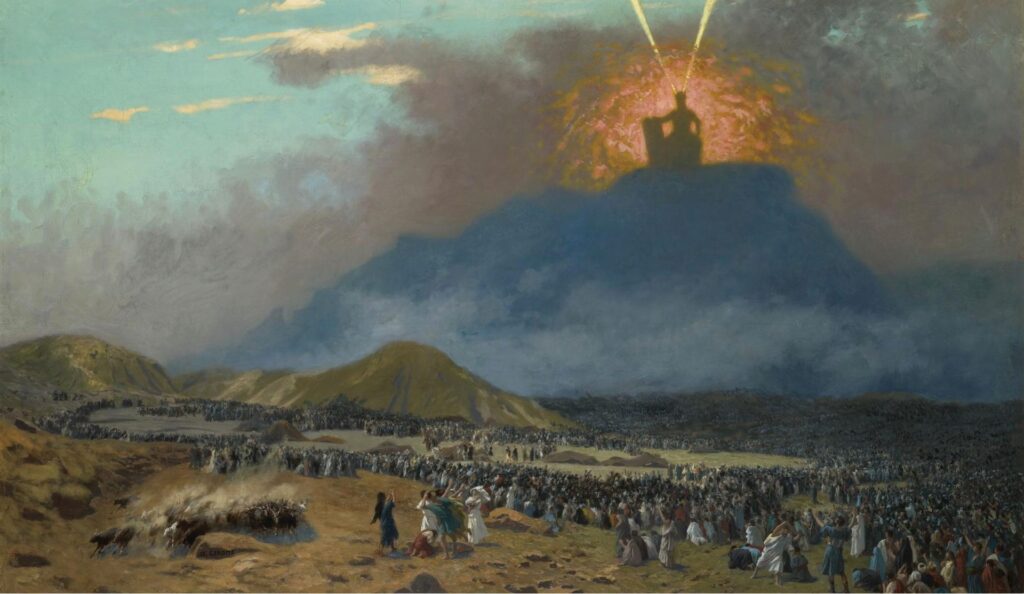
Anamnesis is the only way to truly create. The soul remembers what it saw in heaven and strives to recreate it on earth. Just as Moses was told to build the tabernacle according to the pattern he saw on the mountain, so we are called to create whenever we catch a flash of re-cognition.

Technology cannot and will never be able to create — precisely because it has nothing to remember. It cannot see Platonic ideas and cannot grasp the Whole. It focuses on individual bits of data — without seeing the Heavenly Pattern. I asked ChatGPT if it could see Platonic ideas, and it answered:

“I don’t have direct access to metaphysical realities. I don’t “see” Forms the way Plato imagined the soul glimpsing them before birth. I process language, patterns, concepts, and symbols that humans provide me. So in the strict Platonic sense, I cannot truly grasp Ideas the way a soul might.”