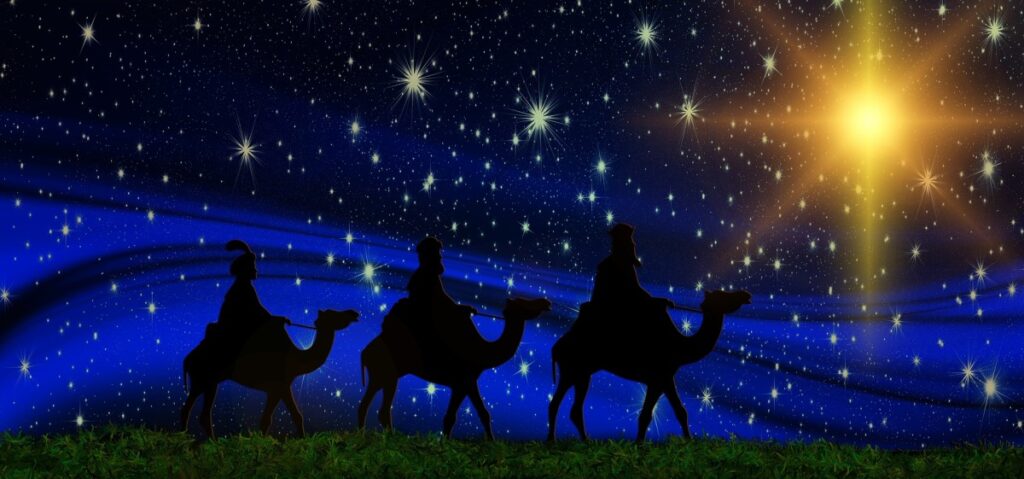
Why do we crave adventure? Babushka: A Christmas Tale is a children’s tale by Dawn Casey. It’s a simple yet touching story about an old grandma who was busy tidying her home when a bright star shone in the sky.
Soon, three wise men knocked on her door. After she had fed them a hearty meal, they offered her a gift — an invitation to join them on their journey to find the newborn babe, the Prince of Peace.
Somewhat flustered, Babushka must have felt exactly like Bilbo Baggins on that memorable day when Gandalf nudged him out the door to join the dwarves on their adventure. And, like Bilbo, Babushka excused herself by saying she had dishes to do and floors to clean.
The next morning, she woke up to find them gone. To her utter surprise, an aching longing smote her heart. She realized she had made a terrible mistake.
Rushing out the door, she searched desperately, asking everyone she met if they had seen the three wise men. Yet, they were nowhere to be found. And so, as the story goes, Babushka is still wandering to this day — searching, asking, hoping… and giving gifts to anyone she meets.
The moral of the story?
When we choose comfort over adventure, we are always left with the residue of longing. The more we settle in our ways, the more painful the realization that we are missing out on something big and real. We see some people following the star and shrug our shoulders: “Fools. They are chasing after the wind.”
And yet, after they leave, we are overcome by an inexplicable yearning. It dawns on us that we have made a terrible mistake by NOT following the star — the call to adventure. We have been the fools; we have been chasing after the wind. We leap up and begin looking for those strange vagabonds.
We are looking for our “tribe” — those who follow the yonder star. We roam the world searching, looking into people’s eyes as if silently asking, “Are you going there too?” The greatest reward is when we find someone with the same glint in their eyes. They are looking for the same thing!
As Professor Digory Kirke said to the children at the end of The Lion, the Witch and the Wardrobe:
“Don’t mention it [your adventure] to anyone else unless you find that they’ve had adventures of the same sort themselves. What’s that? How will you know? Oh, you’ll know all right. Odd things they say — even their looks — will let the secret out. Keep your eyes open.”
And Dostoyevsky mused:
“Beauty is a terrible thing. God and the devil are fighting there and the battlefield is the heart of man.”
Beauty is a terrible thing because it is a call. It ignites a battle in our hearts. We long for it, and yet we resist it at the same time. But sooner or later, we hear a knock on the door. We open it and see strange but happy people with a glimmer in their eyes — the shimmer of the yonder star.
They eat and drink with us and invite us on an adventure. We think, “This is madness. I can’t leave like this — without my handkerchiefs, without first cleaning my floors.” But the next morning, the travelers are gone, and a thought strikes us like a lightning bolt:
“I must find them — now”!
And without another thought, we rush out the door.