What Did Carl Jung Say About Jesus?

What did Carl Jung say about Jesus? “Your vision will become clear only when you can look into your own heart. Who looks outside, dreams; who looks inside, awakes.” — Carl Jung

For as long as we see evil “out there,” we remain asleep. The moment we recognize it within ourselves, we awaken.

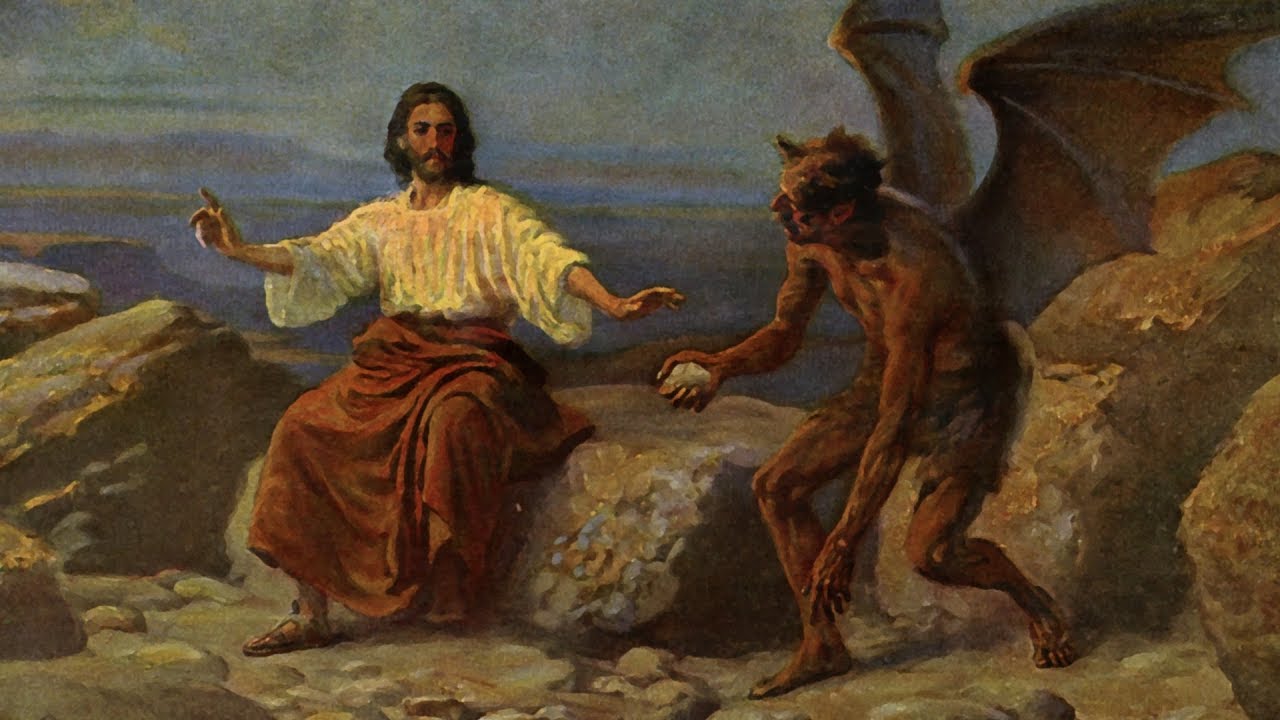
According to Carl Jung, Jesus’s temptations in the desert represent an inner struggle more than a confrontation with an external enemy. Being fully human, Jesus was tempted in every way, just as we are, yet without sin. We sin because we sleep; He did not, because He was awake.

In Jung’s interpretation, Jesus overcame each temptation by becoming conscious of who He was.

In the first temptation —“If you are the Son of God, turn these stones into bread” —the devil invites Him to manipulate physical reality. Feed yourself, don’t live in lack. You are hungry. You can reshape reality to overcome your poverty.

Here, the devil plays on one of the deepest human fears — the fear of going without, the fear of being separate from the Source. When we believe we are separate from the Source, that we don’t have enough, we embark on a journey to “more,” which never ends.

This insatiable desire for more is a symptom of sleep — a sign that we are unconscious of our unity with God. Jesus responds by “eating the true bread from heaven” right there in the wilderness. What did He eat? The will of God. “My food is to do the will of Him who sent Me and to finish His work” (John 4:34).

In John 4:34, He was hungry and thirsty before speaking with the woman at the well — and afterward, mysteriously, He was not. The disciples asked, “Who brought Him food?” No one did. He had enough. Always. We all know this experience: when we are seized by true enthusiasm — literally, en-theos, “in God” — hunger disappears.

The second temptation is about becoming special: “If you are the Son of God, throw yourself down; for it is written, ‘He will command His angels concerning You.’” We all feel this pull. We all want to be singled out, placed on a pedestal as someone exceptional.

Yet, Jesus says that putting God to the test means you don’t believe that you are special already. When we crave specialness, we confess that we do not feel it. We have not heard the heavens open, nor seen the dove descend, nor heard the voice: “You are My beloved Son, in whom I am well pleased.”

The last temptation is the most insidious: save the world by bowing down to the devil. “I can give you the power to end all injustice, all wars, all suffering, all poverty, and make everyone happy — you will be the Savior of the world by establishing your perfect order.

No need to die — you can bring heaven to earth, usher the golden age of humanity this very minute, and make the lives of millions better. Just bow down and bring the necessary sacrifices. Jesus replies, in essence:

“You know the power of force but not the power of a seed. Violence and power are opposites. Violence is sterile — it breeds only more violence. But a seed, when it dies, bears fruit a hundredfold. Worship God alone — for the smallest of seeds holds the true power that transforms the world from within.”

What the devil desires the most is for us to find some external devil to fight with. When we do, we never recognize those same three temptations at work within ourselves each day.

To fight an external devil is to remain asleep; to expose the lies of the inner one is to awaken.

What Did Carl Jung Say About Suffering?

What did Carl Jung say about suffering? The larger our ego, the less likely we are to change without suffering. Ultimately, it is the ego itself that generates and multiplies suffering. According to Carl Jung, suffering arises in the soul when we try to inflate the ego instead of dealing with the shadow.

“Neurosis is always a substitute for legitimate suffering.” — Carl Jung

The paradox of the ego is this: when we try to escape legitimate suffering — the pain we must go through to embrace our shadow — by boosting the ego, we increase our own suffering.

This is the story of the Prodigal Son. He fled his home to escape himself. He thought he could escape his shadow through reckless living. In his desperate effort to outrun his own shadow, he only succeeded in generating a mountain of unnecessary suffering.

And yet, paradoxically, that very self-inflicted and “unnecessary” suffering proved to be necessary after all. It brought him to his senses. It awakened him.

“The privilege of a lifetime is to become who you truly are.” — Carl Jung

Those with an inflated ego rarely change unless the ego is forced to endure the suffering it has brought upon itself.

“There is no coming to consciousness without pain.” — Carl Jung

The AA Big Book recounts the story of an American businessman who, after years of trying unsuccessfully to stop drinking, traveled to Europe to get a consultation from Carl Jung. He completed his treatment with remarkable confidence: physically and mentally restored, and convinced he now understood his mind so deeply that relapse was impossible.

Yet before long, he was drunk again. He returned to Jung and pleaded for the whole truth. The doctor told him:

“‘You have the mind of a chronic alcoholic. I have never seen one single case recover, where that state of mind existed to the extent that it does in you.’ Our friend felt as though the gates of hell had closed on him with a clang.” — (AA Big Book, page 27).

Paradoxically, this became the moment of the gentleman’s awakening. He recovered and lived a sober life. It was the “clang of the gates of hell” that changed him. Often, it is precisely such a clang — the total collapse of illusion — that shatters an overinflated ego.

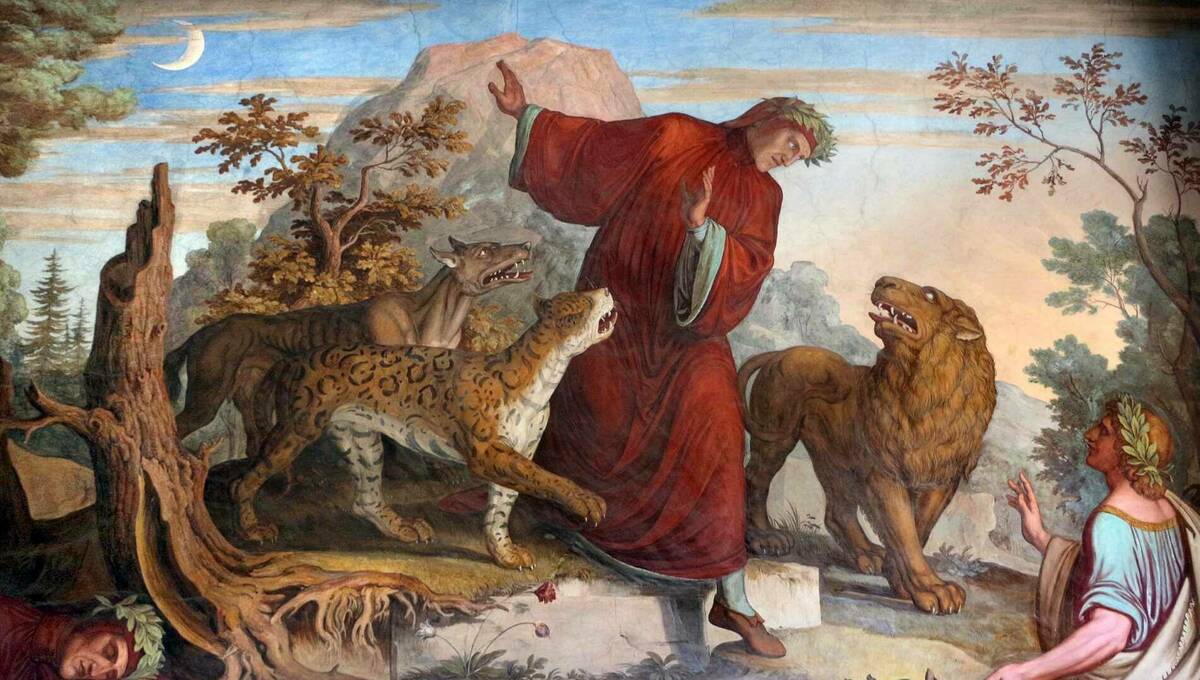
That lowest point is the pivot. It is there that we cry “Miserere,” with Dante Alighieri, who found himself “in the dark wood,” confronted by the three beasts — his own shadow made visible.

When we realize we cannot overcome our own beasts, we cry out for help. In that moment, our ego shatters — and we are saved. It is the point of coming to our senses, of returning home.

Here, all “unnecessary” suffering comes to an end. Guides appear out of nowhere, leading us into our Inferno to confront our shadow. Little do we know that descending is also ascending. By journeying into our personal hell, we simultaneously rise toward Purgatory and Paradise.

The moment we come to our senses, we know we have a home and a Father. We drop the pig’s food we have been eating and follow the Guide.

What is the Hidden Message of Groundhog Day?

What is the hidden message of Groundhog Day? I would never have thought there was something in Groundhog Day that I didn’t know. I thought I knew the movie by heart. Apparently, I didn’t. To memorize something means to commit it to memory; to learn something by heart means to commit it to the heart.

As my wife and I watched the first few minutes of the movie last night, she suddenly asked, “Why is the groundhog’s name Phil — just like Phil Connors?” Her question sent me reeling. How could I have missed it? Yes! Phil Connors is Punxsutawney Phil. He is the groundhog of the story.

According to Pennsylvania Dutch legend, if a groundhog emerges from its burrow on February 2 and sees its shadow, it retreats into its den and winter lasts six more weeks. If it does not see its shadow, spring arrives early.

Phil Connors is a weatherman—but he is under the weather. He’s fed up with people. He is under his own shadow, though he is unaware of it. His skies are overcast 24/7. Rita and Larry try to pull him out of his shadow, but he always retreats into his den. People drive him nuts — and into his “den.”

When you are under the weather, people always drive you nuts. You want to retreat, withdraw, and languish quietly under the weather of your own exclusivity. Your shadow grows large and frightening. You want to hide. Everyone with a big shadow has a den to hide in — from himself and from others. The shadow is a scary thing.

How do you get out of it?

Spiritually speaking, my shadow is always there until I become aware of it. It remains until I realize its presence. The moment I see it, it is gone. When I become aware of my own shadow, I look behind me and do not see it. My spring has come.”

Phil’s shadow is enormous. He hates his job, he hates his circumstances, he hates people. And like Punxsutawney Phil, he retreats into his “den” to get away from it all. He is not yet aware of his own shadow even though he lives under it 24/7.

So he hides from himself and from others. His “den” is his Groundhog Day. He is trapped in his den — in his own shadow — locked in a vicious circle. How do you escape your own shadow?

All vicious circles are broken the moment we die. All shadows are trampled down by death to self. The Paschal hymn —“Christ trampled down death by His own death”—carries profound spiritual wisdom. It foreshadows the death of the shadow.

Phil remains stuck in his “den” — February 2 — until he becomes aware of his shadow and agrees to die to himself. He passes through the vicious cycles of his own Inferno and Purgatory until, One Day, he finally lets go. The next morning he wakes up — and there is no shadow. It is gone! His spring has come.

Phil Connors is a “weatherman under the weather” who is unaware of his own shadow. That shadow binds him in a vicious cycle of misery until he recognizes it and… releases it.

The moment we die to ourselves, we are freed from the shadow. A new day dawns. And it is February 3. Spring is coming.