
How Did Aristotle View Matter? The Forest Beneath All Forms

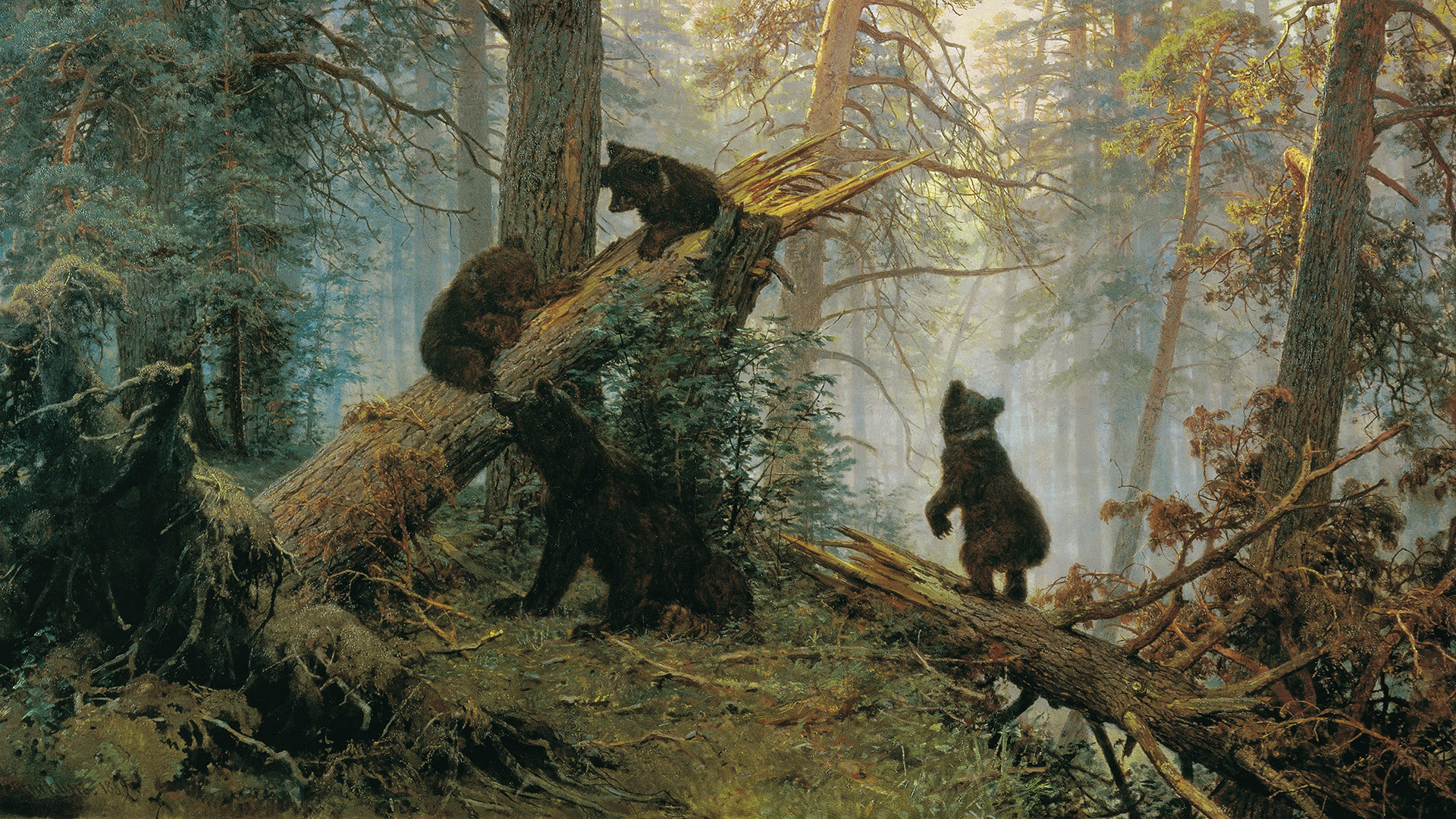
How did Aristotle view matter? Aristotle’s main Greek word for matter is ὕλη (hýlē). Interestingly, hýlē originally meant wood, timber, or forest — the raw stuff one builds with. Why would Aristotle choose such a word to name the underlying constituent of all things?

What does wood have to do with matter?

For Aristotle, hýlē represented the potential — not actuality.

“Matter (hýlē) exists potentially, while form (eidos) exists in actuality.” — Metaphysics

In other words, hýlē is matter as potential — something not yet formed. This may well be the reason why the word was later translated into Latin as materia, derived from mater (“mother”). Originally, however, materia also referred to wood or building material, especially timber taken from a tree.

The proximity of materia to mater (“mother”) is not accidental: both hýlē and mater point to that which gives birth, nourishes, and brings forth. For Aristotle, wood is the most fitting metaphor for potentiality.

Just as a mother brings a person from potentiality into actuality — not by imposing a shape from without, but by allowing form to emerge from within — so wood (hýlē) represents something waiting to be shaped. Matter is not dead or mechanical, not a mere standing reserve.

It is something living that grows and reveals its potential in various forms. The ancients saw matter not as something we shape but as something that shapes us. Wood is not something we grow; it is something that grows us. That is why the first thing God did after creating Adam and Eve was to plant a garden in the East.

God knew that humans could realize their potential only among living things. It was the Garden that shaped Adam, not vice versa. The Garden was the womb that would shape Adam into the person he was made to be. As Adam tended the Garden, the Garden tended Adam. Adam grew the Garden, and the Garden grew Adam.

Humans grow only in the garden — that’s why we have kindergartens. We must have “adult-gardens” as well. That is what Elder Amphilochios (Makris) of Patmos must have felt when he told people, after receiving their confession, that their penance was to plant a tree.

Curiously, older descriptions of Patmos note that the island historically had very few trees. Today, there are areas of pine, tamarisk, cypress, mastic, and other trees growing naturally and in groves. The island is turning into a garden.

If you want to grow, you must grow something. Resilience to evil comes to those who, like hobbits, “love all things that grow.” The only way to overcome evil is to be rooted in the soil of the earth — which is “deeper magic.”

As St. Amphilochios used to say to his many disciples:

“Do you know that God gave us one more commandment, which is not recorded in Scripture? It is the commandment “love the trees.” When you plant a tree, you plant hope.”


What is the Origin of the Word Data?

What is the origin of the word data? What is data? Here’s a definition I found online:

“Data is raw, unorganized facts, figures, symbols, or observations that represent details about events, objects, or phenomena. As the basic, unprocessed units of information, data can be numerical (quantitative) or descriptive (qualitative). Once collected, structured, and interpreted, data is transformed into valuable insights used for decision-making.”

However, if you look up the etymology of the word data, you will see that it means “something given” — a gift. It comes from the Proto-Indo-European root do-, “to give,” and belongs to a whole family of words related to giving, such as donationdowryPandoraTheodore, and even дар (gift) in Russian.

The difference between the modern understanding of data and its original meaning is subtle but telling. In our time, data is all about collecting information, as if it were simply there for the taking. In the past, however, data meant a gift — and gifts must be recognized.

For example, when I look at my legs, I can collect all sorts of data about them, but that doesn’t necessarily mean that I have recognized them as a gift. Recognizing a gift is always a matter of awareness, not calculation.

Even if I collect all the “data” about my legs — length, weight, width, and so on — I still don’t truly know what they are. I only know what they are when I become aware that they have been given.

“When we were children we were grateful to those who filled our stockings at Christmas time. Why are we not grateful to God for filling our stockings with legs?” — G.K. Chesterton

My legs are a given — datum. But my knowing what they are is not a given — not datum. Properly speaking, data is a gift recognized. All measurements and calculations made prior to this recognition diminish knowledge rather than increase it.

True knowledge is born from the awareness of a gift. The modern approach to data leads to the diminishment of true knowledge because it is not rooted in wonder — the awareness that we possess nothing yet have been given everything. Without awe and wonder, data becomes anti-knowledge.

What is anti-knowledge? It is a husk of knowledge, devoid of substance. Unless I recognize the gift of legs in my stockings, I live under the illusion of knowing. To know my legs is to experience the awe of having them. That is true knowledge — true data.

True data grants joy, not control or power. When I become aware of the gift of legs, I am struck by the joy of walking on them. If I believe I possess them by right, I will feel no joy. Joy is the overflow of awareness that I dwell within a gift.

Data is a given, but we cannot take it for granted. If we do, we fail to understand that it has been granted. Awareness of a gift is the only antidote to taking things for granted.

We speak of “harvesting” data, “processing” data, “owning” data. The language reveals the posture: reality is no longer a gift but a standing resource. And once reality becomes a resource, wonder goes. What remains is manipulation.

But gifts cannot be manipulated without ceasing to be gifts. To know the meaning of data we must turn and become like little children. A child knows their legs not by measurements in inches, but by the measure of delight in using them.

A knower is a lover, not a consumer. A lover doesn’t stand outside and analyze; he stands within and is astonished.

Recovery of true knowledge begins with a conversion of attention — a return to wonder. It’s all about learning to master thinking through thanking.