Does AI Make Us More Human? Hans Christian Andersen on the Machine’s Triumph and Collapse

Does AI make us more human? In her recent video, Julia McCoy, one of the early pioneers in AI content marketing, says that she and her family made a conscious choice to move away from technology — to rural Tennessee, to a real flesh-and-blood community, to forests, to soil-grown food, to a church, to the mountains.

In her video, titled Mountains Over Microchips, she reflects on an uncanny trend produced by the rise of AI: the more advanced AI becomes, the more we humans begin to reflect on what it means to be human.

What is it about me that’s irreplaceable?

According to Julia, people are awakening to the unbridgeable gap between the real and the artificial and are making a conscious choice to move closer to the real. The more the artificial is forced upon us, the more we realize how deeply we desire what is real.

Large AI companies push the narrative: “Upgrade or die” — suggesting that if you do not jump on the AI wagon, you will become obsolete. And yet, Elon Musk was reportedly surprised not to see a flood of volunteers to test his new Neuralink brain chip — an interface between machine and human.

The human mind can be muddled by slogans; the human heart cannot. The heart senses a difference the mind struggles to articulate. As Julia observes, in 2025–26 more and more people have chosen to become homesteaders.

The “whole foods” movement continues to spread across the globe. The price of young hens is rising — people want real eggs and real meat. The rise of the artificial awakens us to what the real feels like. The artificial may fool our eyes — but not our hearts.

In our heart of hearts, we know that real art feels different from AI-generated one. We know that real bread tastes different from synthetic substitutes. We know that real, eye-to-eye conversations with flesh-and-blood people are vastly different from Zoom calls. We know that people in person feel different from the same people on a screen.

Screens are better than nothing, but worse than everything. And we, as humans, need everything.

Perhaps the simplest way to capture what is happening to humanity is through Hans Christian Andersen’s absolute metaphor in The Nightingale.

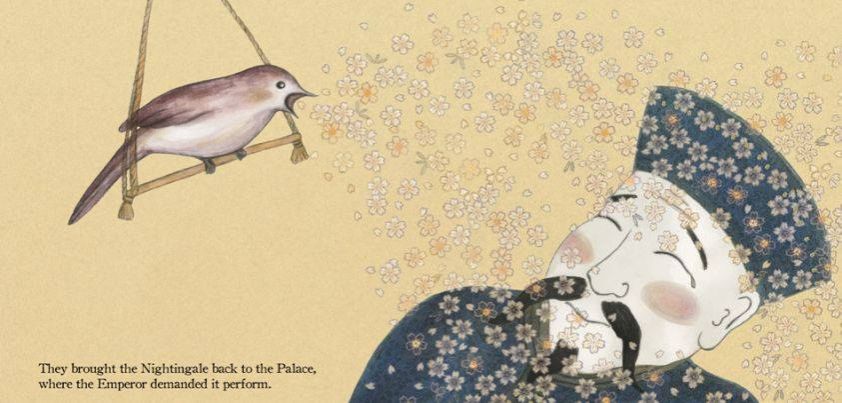
An Emperor in China hears about a humble nightingale whose song is so beautiful that it moves listeners to tears. He summons the bird to the palace, and its song brings him joy every day.

But one day, the Emperor receives a gift — a jeweled mechanical nightingale. It is dazzling and predictable, singing on command whenever the Emperor desires. The living nightingale is gradually forgotten and eventually flies away.

In time, the mechanical bird breaks. The Emperor falls gravely ill. As Death approaches, the real nightingale returns and sings beside his bed. Its living song restores his strength, and Death itself flees.

“And the Nightingale sang so sweetly that the blood coursed quicker and quicker through the Emperor’s weak limbs, and even Death listened and said, ‘Go on, little Nightingale, go on!’”

Death then returns all the treasures it had taken:

And Death gave back each of these treasures for a song, and the Nightingale went on singing. And he sang of the quiet churchyard, where the white roses grow, where the elder trees blossom, and where the fresh grass is watered by the tears of the living.

Then Death felt a longing for his garden, and like a cold white mist he floated out of the window.”

The Nightingale is the undying symbol of the real. When we hear, see, and touch the real, we come alive. Death itself longs to hear the real and will surrender its treasures for a song — the Song.


What is the True Significance of Pilgrimage?

What is the true significance of pilgrimage? “Where are we really going? Always home.” — Novalis

The history of mankind is the history of leaving and returning. We always go there and back again. Never only there — always there and back again.

Somehow, we all know that if we stay at home, without The Adventure, we will never become who we are. We need the Road, the Way. We must find the “golden child” within — using Jung’s archetype. The road goes ever on and on, down from the door where it began, and it is a road “there and back to yourself.”

Any road can become a way back to yourself — if you recognize it as The Way, the Tao. People step out the door because of an inexplicable yearning, an inner urge. Whether I go to Tahiti, Yellowstone, or a park across town, I don’t really go to a place — I go to a person: back to myself.

Hermann Hesse wrote in The Journey to the East:

“Each man had only one genuine vocation — to find the way to himself.”

In the wake of World War I, Hesse became keenly aware of pilgrimage as the only way a person can remain sane in an insane world. We are all pilgrims, following yonder star. We caught a glimpse of it amid the fray, chaos, confusion, and disillusionment of our hope-shattering times.

It calls us by its otherworldly light to go and look for the Child. But how do you tell of such a journey? Hesse’s allegory The Journey to the East captures his uncanny experience of pilgrimage to the “Land of the Morning Star” — his quest to remain spiritually alive in a world gone mad.

What do we need in order not to go mad with the world, which Jung described as undergoing a “collective psychosis”?

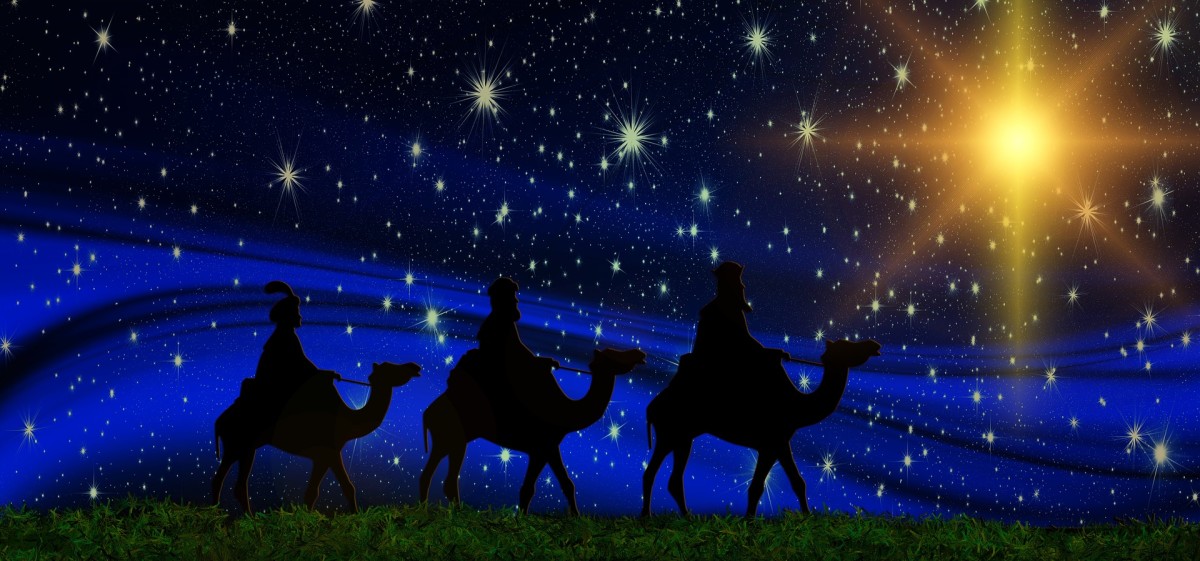
According to Hesse, we need to rememberTo recall the star we once saw and set out on pilgrimage. The way to the star is The Way. There, on the boundless stretches of time and space, we will encounter the real and the mythical alike. We will meet Melchior, Balthasar, and Caspar — the Magi — who saw the star too and embarked on the same journey.

“For our goal was not only the East, or rather the East was not only a country and something geographical, but it was the home and youth of the soul, it was everywhere and nowhere, it was the union of all times.” — Hermann Hesse, The Journey to the East

The Pilgrimage is something we yearn for and yet fear the most.

“It’s a dangerous business, Frodo, going out your door. You step onto the road, and if you don’t keep your feet, there’s no knowing where you might be swept off to.” — Bilbo Baggins

Bilbo secretly longed for The Journey. Gandalf’s nudge out the door was not an act of forcing — it was the awakening of Bilbo’s own dreams: the desire to go there and back again. Bilbo had glimpsed “the star” before. He remembered its mysterious call — and he hated himself for not following it.

Deep down, he knew that the worst tragedy under the sun is not to go on a journey.

Hesse writes:

“Once in their youth the light shone for them; they saw the light and followed the star, but then came reason and the mockery of the world; then came faint-heartedness and apparent failure; then came weariness and disillusionment, and so they lost their way again, they became blind again. Some of them have spent the rest of their lives looking for us again, but could not find us. They have then told the world that our League is only a pretty legend and people should not be misled by it.”

To see the Star is a dangerous thing — it calls us back to ourselves. The world tells us it is “a pretty legend,” nothing more, but the heart tells a different story. The heart yearns for nothing less than to become a Pilgrim and join the League.