What is the Most Forgotten Language According to C.S. Lewis?

Image Source

What is the most forgotten language? In C.S. Lewis’s Space Trilogy, the original universal language spoken by all rational beings is called Old Solar, or Hlab-Eribol-ef-Cordi.

It is not a human language — it is primordial speech shared across all the planets except the Earth, Thulcandra. Ransom explains:

“That original speech was lost on Thulcandra, our own world, when our whole tragedy took place. No human language now known in the world is descended from it.” — Perelandra

What is Hlab-Eribol-ef-CordiLewis describes it as an ancient, pre-Fall tongue shared by angels (eldila) and rational beings. It is highly musical, highly inflected, and deeply meaningful.

How did the pre-Fall language sound? On the Earth, we have lost that unified speech. None of our languages descend from it directly. In Lewis’s imagery, the pre-Fall language was Solar — a speech originating from the Sun, as he suggests in his poem “The Birth of Language.”

In that poem, every word of the original language is infused with the careering Fires of the Sun — the Divine Logos — echoing the primordial Word: “Let there be…” Each word brings forth the reality it names. Can we glimpse that language today? Lewis suggest that the only power that can resurrect something of that essential speech is “true verse.”

Why? Because only in poetry do we return to the Divine poeisis — the primordial Speech that created the worlds. Lewis says:

Yet if true verse but lift the curse, they [words] feel in dreams their native Sun.

Every time we strike a true metaphor, words momentarily “dream” of their home — the Sun. On this side of the Fall, the only way to hear the Solar Speech is through mind-shifting poetry, the kind that lifts language back toward its unfallen state. C.S. Lewis hints at this in That Hideous Strength when he describes the descent of Mercury:

“This was Language herself, as she first sprang at Maleldil’s bidding out of the molten quicksilver of the star called Mercury on Earth.”

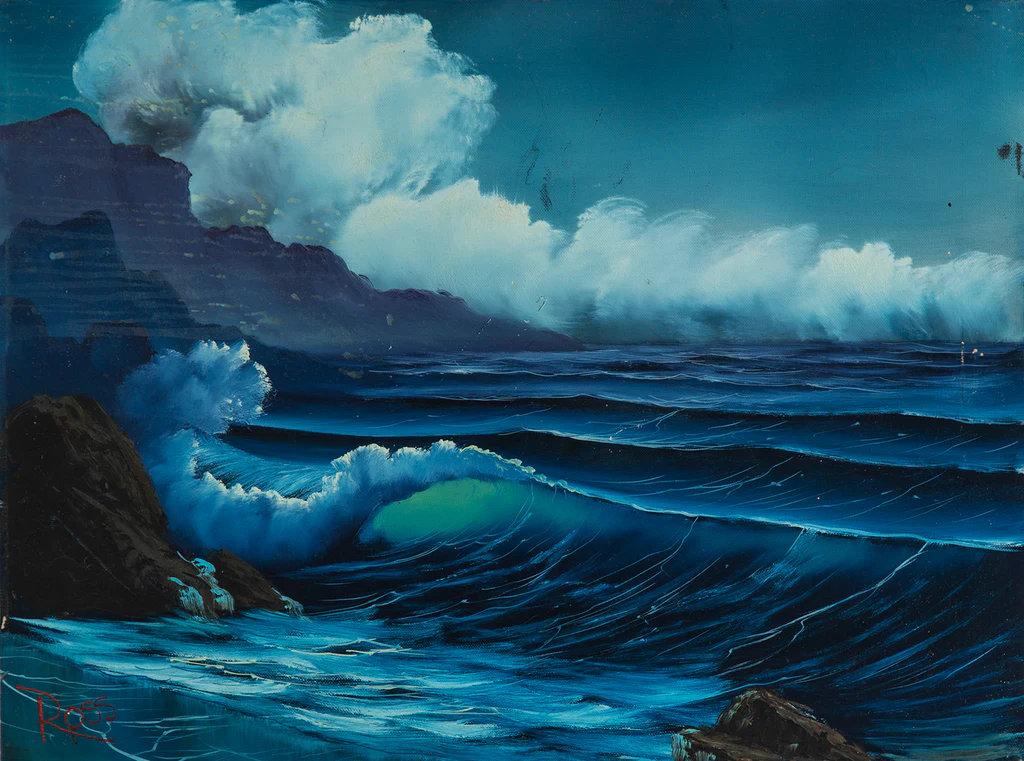
For Tolkien, the most powerful metaphor for Divine Speech is… water. Water allows us to hear the Old Solar as nothing else under the sun:

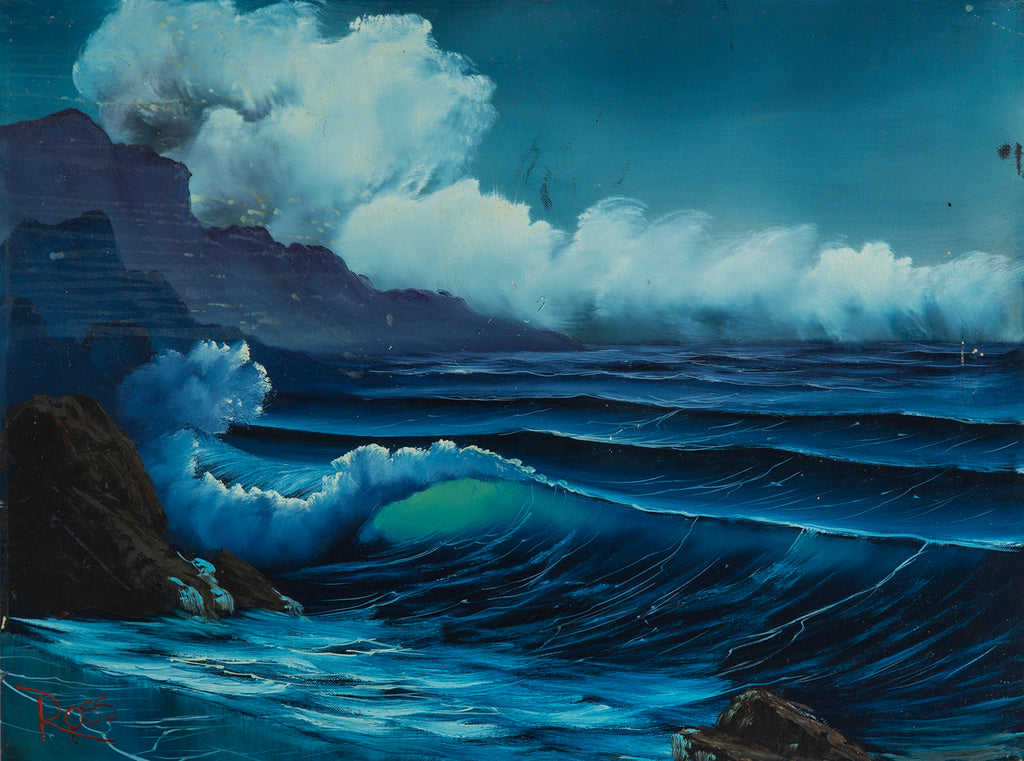
“And it is said by the Eldar that in water there lives yet the echo of the Music of the Ainur more than in any substance else that is in this Earth; and many of the Children of Ilúvatar hearken still unsated to the voices of the Sea, and yet know not for what they listen.” — The SilmarillionAinulindalë

What do we listen to when we hearken, unsated, to the pattering of rain on the windowsill? We attune to the essential speech that created the worlds. We lean into the faint resonance of the Music of Ilúvatar condensed into matter. For it is said that Ulmo — the Ainu through whose thought and song Ilúvatar shaped the waters of Arda— was “most deeply instructed by Ilúvatar in music.”

“Now to water had that Ainu, whom the Elves call Ulmo, turned his thought; and of all most deeply was he instructed by Ilúvatar in music.” — The SilmarillionAinulindalë

Among the Ainur, Ulmo was the one whom Ilúvatar instructed most deeply in music, and therefore in water the echo of that Music lives more than in any substance else that is in this Earth. This could be the reason why the Nazgûl and other evil creatures in Middle-earth hate and fear water — it rings with the song of Ulmo.

We all long to hear Old Solar because it is true speech — saturated with the Music of Creation from which our being arose. Though this language has long been forgotten on Earth, its life-giving presence still haunts us — in poetic utterance, in moments of heightened perception, and most vividly in the contemplation of water, which embodies that primal Speech as nothing else under the sun.

When we listen to the sound of water, we do not know for what we listen, yet we listen for it all the same — for in it we hear a fading echo of the Speech that uttered the world into existence.

What is the Primary Purpose of Literary Criticism?

What is the primary purpose of literary criticism? Interestingly, in the Book of Judges, “judging” (ש־פ־ט (shafat) is not courtroom work. It’s all about saving and delivering. For example, David exclaims in Psalm 26:1: “Judge me, O LORD; for I have walked in mine integrity.”

Obviously, David wasn’t asking God to judge him as if on trial. He is asking God to deliver him from danger. The English word judge comes from the Latin iūdex, from iūs (right, justice) + dīcere (to speak). A judge is literally “one who speaks rightly”—one who declares the truth of a thing.

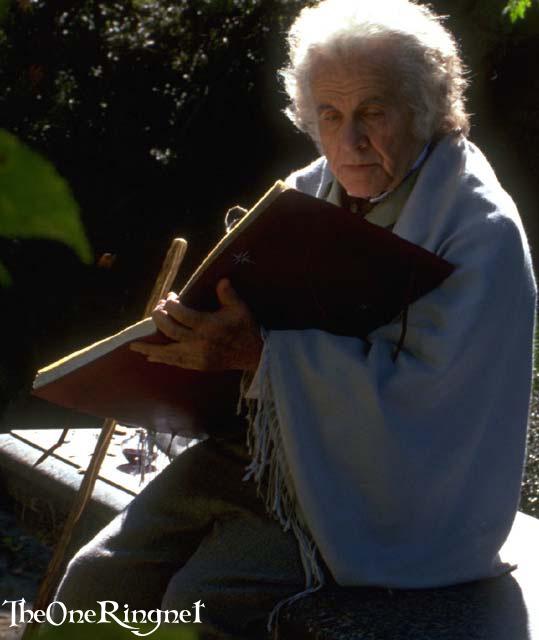
But what does it mean to speak rightly about something? For example, before Bilbo had finished composing his poem about Eärendil, Elrond told him they would all get together and “judge” it before their merrymaking.

“Elrond laughed. ‘He [Dunadan] shall be found,’ he said. ‘Then you two shall go into a corner and finish your task, and we will hear it and judge it before we end our merrymaking.”

Does Elrond mean they will gather as a panel to determine whether the poem is “good”? Hardly. That is not what happens. They gather in the Hall of Fire, where Bilbo recites the poem. It has such a profound effect on the listeners that some of them seem transported to another realm, as if under a spell.

When Bilbo finishes, the elves burst into warm applause. One elf says:

‘Now we had better have it again,’ said an Elf. Bilbo got up and bowed. ‘I am flattered, Lindir,’ he said. ‘But it would be too tiring to repeat it all.’

Clearly, this is not “judgment” in the modern sense of criticism. In Tolkien’s usage, to judge means to discern what is good, not to search for flaws.

The modern meaning of “judge” has drifted far from its roots. And the same is true of the word criticize. Today it means “to find fault.” Yet its origin tells a different story.

The word “criticize” comes from the Greek κρίνω (krínō) — to separate, distinguish, discern. In ancient times, “to criticize” meant to penetrate the surface of a thing and see it for what it truly is — to recognize and celebrate its value. True literary criticism is never about criticizing; it’s about loving.

Ironically, the discerning aspect of criticism has been lost. But a true judge is a connoisseur — one who appreciates. A true judge is a lover. To “speak aright” is to discern what is good in this and that — and to celebrate it. Only a lover has the right to judge, because only a lover can truly discern.

When criticism is separated from discernment, it never improves or transforms anyone. A desire to improve awakens only in a heart that feels appreciated. If we look only for what is wrong, nothing changes. If we look for what is right, we become true judges — we speak aright.

Was Bilbo’s poem impeccable? Not at all. He admits it himself when he explains that Aragorn insisted on adding a line about the green stone:

“He seemed to think it important. I don’t know why. Otherwise he obviously thought the whole thing rather above my head, and he said that if I had the cheek to make verses about Eärendil in the house of Elrond, it was my affair. I suppose he was right.”

True criticism is never about pointing out flaws. True criticism is the love of what has been discernedOnly what is loved can ever be improved.

Invisible Guardians: Who Protected the Borders of the Shire?

Who protected the borders of the Shire? The hobbits were blissfully unaware of who they should thank for the long peace of their land. For many centuries, they lived happily in the Shire, never realizing what terrible creatures roamed just beyond their borders.

Aragorn said:

“Little do they know of our long labour for the safekeeping of their borders, and yet I grudge it not”…”

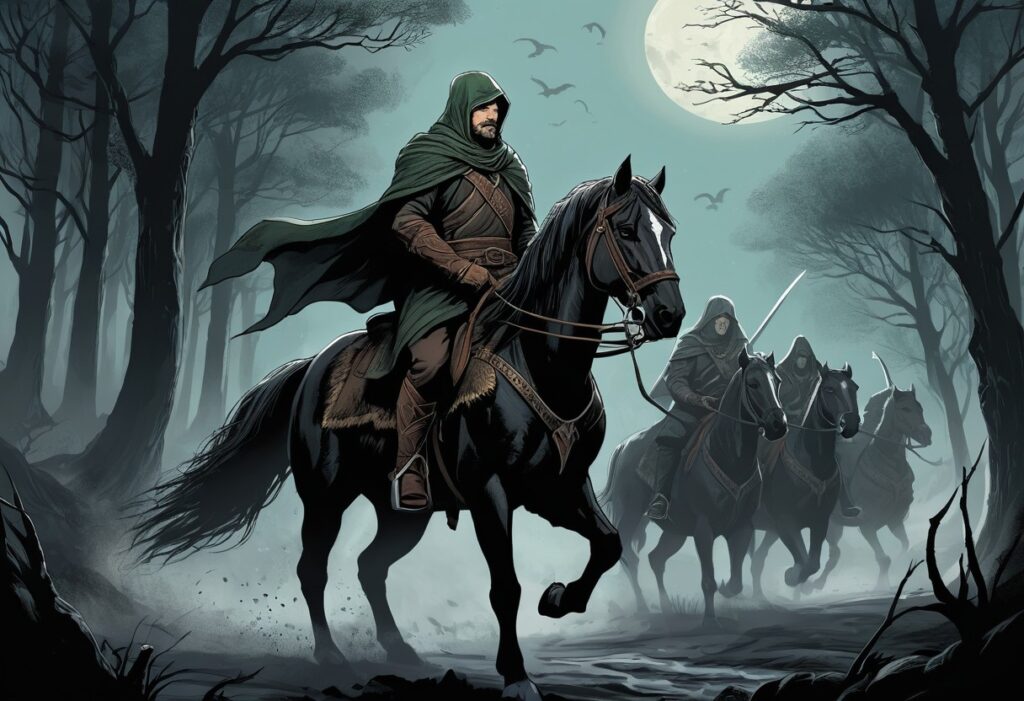
The Shire’s frontiers were carefully watched by Gandalf and by the Rangers of the North, the remnant of the Dúnedain. They held the darkness at bay, while the hobbits remained completely oblivious to the dangers lurking beyond their green pastures.

One of the most mysterious passages in the Bible—2 Thessalonians 2:7—talks about “the mystery of lawlessness that is already at work, and the one who now holds it back will continue to do so till he is taken out of the way.”

Someone is holding back spiritual darkness this very minute. We don’t know who they are. They are skillful with their spiritual blade, and until they are there, chthonic monsters are kept at bay. We sip our coffee, walk in the park, enjoy the sunset, laugh with friends, watch the news, and think that the fates of the world are decided by the politicians.

They are not. The earth is preserved not by might but by salt. How much salt is needed for the earth not to spoil? Not much. A few grains. Even one blessed man may well be enough. Once, Abraham was bargaining with God about the fate of Sodom. He asked if the city would be spared for the sake of fifty righteous men. God said yes.

Abraham kept bargaining: Forty-five? Forty? Thirty? Twenty? Ten? Each time God said “yes.” Eventually, God sent his angels to rescue the last one—Lot. One grain of salt is enough to keep spiritual darkness at bay. Until that one is taken out of the way, all is well.

When chthonic monsters appear at our borders, it is a sure sign that too few Guardians remain. If the Shire is still lush and green, it must be because of Rangers still standing watch at the edges of the land. Rangers are invisible, unrecognized. When we do see them, we scarcely take notice—they look ragged, forlorn, and forgotten.

And who can tell? Maybe the good earth itself endures only because of one old man hidden away in the heart of New York, Moscow, or Beijing. Such is divine irony (from the Greek eironeía—to “feign ignorance,” or to “play the fool”). We imagine that the peace of the world is preserved in the corridors of power, yet in truth, it may be upheld in a lonely hut somewhere deep in the Siberian taiga.

Chthonic monsters are not afraid of politicians or earthly power. They fear salt and light—those who wield the razor-sharp blade of the Spirit and drive them back by their very presence. Divine irony is inscrutable: it would utterly shatter us if, even for a second, we could glimpse the ones for whose sake the sun still rises over the horizon.

The Rangers of the North walk among us unnoticed—unshaven, weary, cloaked in dust. We, the hobbits of the world, laugh at them or dismiss them, never suspecting that our own laughter still rings because someone, somewhere, wields a power beyond our comprehension.

The true balance of the cosmos is preserved not by kings, but by rejected fools who carry the divine breath in their lungs. Their songs may be too quiet for us to hear, and yet strong enough to hold back chthonic monsters until the first gleam of Dawn.

What Does Saruman of Many Colors Mean?

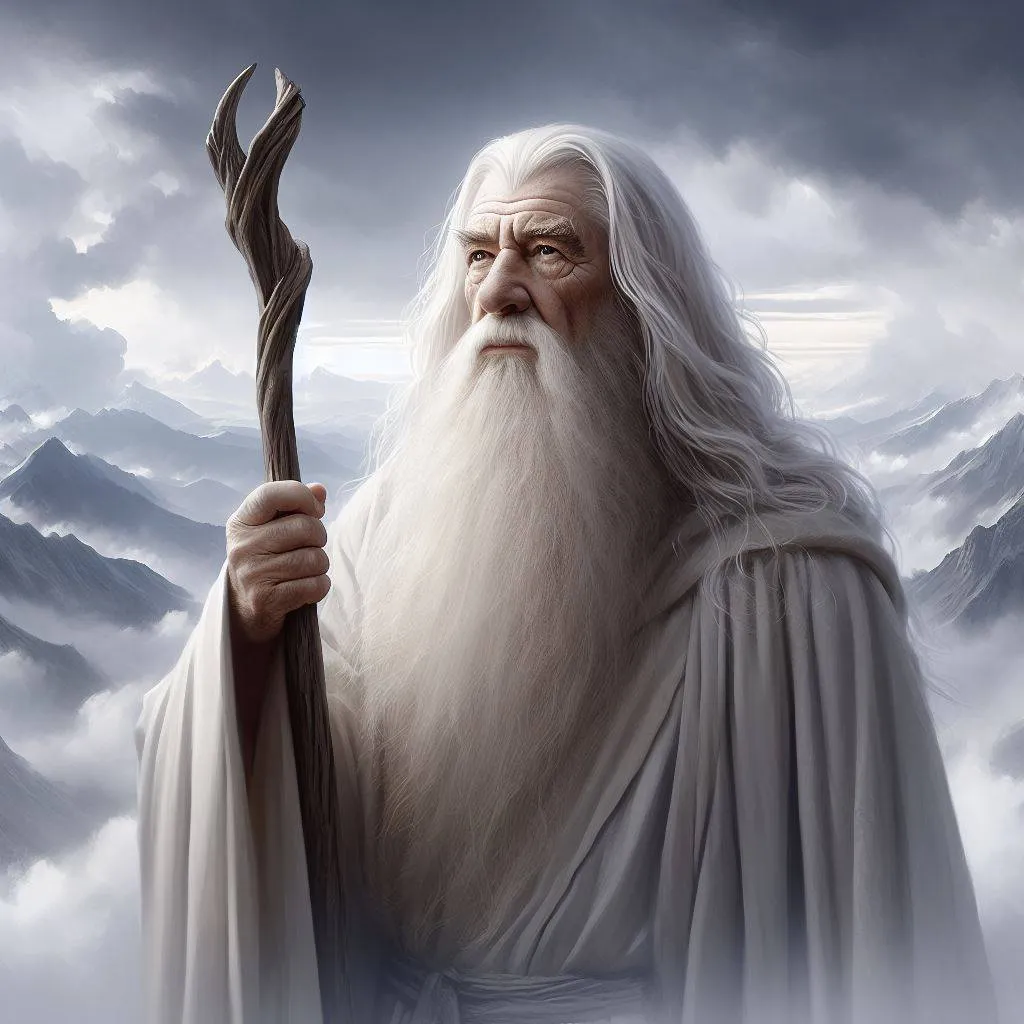
What does Saruman of many colors mean? Saruman the White was white up to a point. Beyond this point, he only “seemed” white. He said to Gandalf in Orthanc,

“I am Saruman the Wise, Saruman Ring-maker, Saruman of Many Colours!’’

When Gandalf looked, he “saw that his robes, which had seemed white, were not so, but were woven of all colours, and if he moved they shimmered and changed hue so that the eye was bewildered.”

The white that he once was had been broken into many colors. He was now the “rainbow Saruman.” Saruman believed in breaking things to find out what they were. He believed this would give him power. According to Gandalf, he strayed from the path of wisdom,

“And he that breaks a thing to find out what it is has left the path of wisdom.”

When you want to know what something “is,” you can’t break it. You must encounter it as a Whole. Being is holistic. It’s not breakable. It’s not reduceable. A thing that is cannot be less than it is. To know the White one must encounter the White, not break the White into many colors.

For Saruman, the White was only the beginning. He wanted to “use” the White for his purposes. He wasn’t interested in “knowing” the White; he was interested in “using” the White. What you want to know you can’t break. What you want to use you can’t help breaking.

‘‘White!’’ he sneered. ‘‘It serves as a beginning. White cloth may be dyed. The white page can be overwritten; and the white light can be broken.’’

Gandalf wisely retorts,

‘‘In which case it is no longer white.”

A broken white is not white. A whole white is not a thing to be used but a living reality to participate in. Participation is the highest wisdom. Gandalf knew it in his gut. He learned it from Nienna herself, the Queen of Pity when he was her pupil in times immemorial when his name was Olórin. From Nienna, he learned patience and compassion.

He praised Bilbo for showing compassion to Golum — knowing that he had a part to play in the Whole, for better or worse. He trusted that the Hobbits would destroy the One Ring because he had perceived their part in the Great Music. He had learned to be patient and wait for the Whole to unfold. That’s why he became Gandalf the White — or Saruman as he should have been.

Later, Tolkien would write in his Mythopoeia,

Man, Sub-creator, the refracted light
through whom is splintered from a single White
to many hues, and endlessly combined
in living shapes that move from mind to mind.

The White can either be broken or refracted. When broken and used, it ceases to be white. When refracted to be encountered, it remains the Living White — and creates a symphony of colors. When we encounter the Living White, it passes through us and gets refracted to many hues without being diminished.

Everyone who participates in the Living White shines with refracted light. They become sub-creators, each refracting the White in his or her own way.