Does AI Make Us More Human? Hans Christian Andersen on the Machine’s Triumph and Collapse

Does AI make us more human? In her recent video, Julia McCoy, one of the early pioneers in AI content marketing, says that she and her family made a conscious choice to move away from technology — to rural Tennessee, to a real flesh-and-blood community, to forests, to soil-grown food, to a church, to the mountains.

In her video, titled Mountains Over Microchips, she reflects on an uncanny trend produced by the rise of AI: the more advanced AI becomes, the more we humans begin to reflect on what it means to be human.

What is it about me that’s irreplaceable?

According to Julia, people are awakening to the unbridgeable gap between the real and the artificial and are making a conscious choice to move closer to the real. The more the artificial is forced upon us, the more we realize how deeply we desire what is real.

Large AI companies push the narrative: “Upgrade or die” — suggesting that if you do not jump on the AI wagon, you will become obsolete. And yet, Elon Musk was reportedly surprised not to see a flood of volunteers to test his new Neuralink brain chip — an interface between machine and human.

The human mind can be muddled by slogans; the human heart cannot. The heart senses a difference the mind struggles to articulate. As Julia observes, in 2025–26 more and more people have chosen to become homesteaders.

The “whole foods” movement continues to spread across the globe. The price of young hens is rising — people want real eggs and real meat. The rise of the artificial awakens us to what the real feels like. The artificial may fool our eyes — but not our hearts.

In our heart of hearts, we know that real art feels different from AI-generated one. We know that real bread tastes different from synthetic substitutes. We know that real, eye-to-eye conversations with flesh-and-blood people are vastly different from Zoom calls. We know that people in person feel different from the same people on a screen.

Screens are better than nothing, but worse than everything. And we, as humans, need everything.

Perhaps the simplest way to capture what is happening to humanity is through Hans Christian Andersen’s absolute metaphor in The Nightingale.

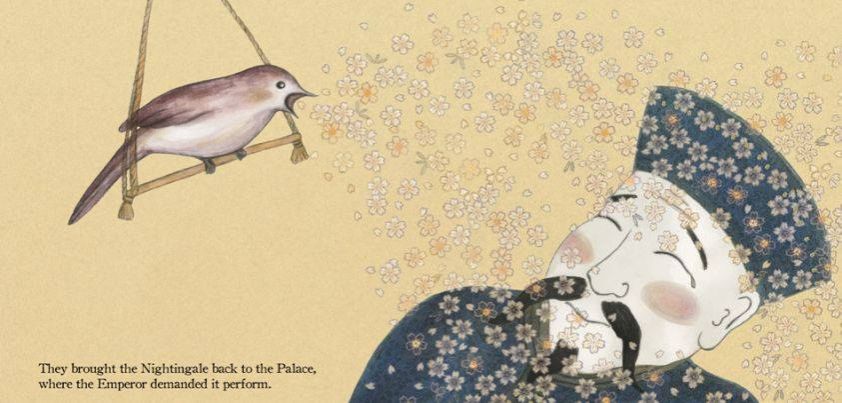
An Emperor in China hears about a humble nightingale whose song is so beautiful that it moves listeners to tears. He summons the bird to the palace, and its song brings him joy every day.

But one day, the Emperor receives a gift — a jeweled mechanical nightingale. It is dazzling and predictable, singing on command whenever the Emperor desires. The living nightingale is gradually forgotten and eventually flies away.

In time, the mechanical bird breaks. The Emperor falls gravely ill. As Death approaches, the real nightingale returns and sings beside his bed. Its living song restores his strength, and Death itself flees.

“And the Nightingale sang so sweetly that the blood coursed quicker and quicker through the Emperor’s weak limbs, and even Death listened and said, ‘Go on, little Nightingale, go on!’”

Death then returns all the treasures it had taken:

And Death gave back each of these treasures for a song, and the Nightingale went on singing. And he sang of the quiet churchyard, where the white roses grow, where the elder trees blossom, and where the fresh grass is watered by the tears of the living.

Then Death felt a longing for his garden, and like a cold white mist he floated out of the window.”

The Nightingale is the undying symbol of the real. When we hear, see, and touch the real, we come alive. Death itself longs to hear the real and will surrender its treasures for a song — the Song.

Does Technology Always Mean Progress? The High Cost of Making Things Cheap

Does technology always mean progress? Recently, YouTube served me a video by Julia McCoy titled “AI Just Killed Video Production,” introducing Dzine AI — a new “revolutionary” tool that has, as she claims, collapsed the entire video production industry into a 60-second workflow.

It promises to replace the costly process of traditional video production — hiring a voice actor, an animator, and a video editor — with a $25-per-month subscription.
Surprisingly, the show’s host isn’t Julia herself but her AI clone, generated with Dzine AI. The real Julia appears only at the end.

You can take any image, any character, any style, and make it speak your exact words with perfect lip sync. Bottom line? Cut your costs. Cut your time. Maximize your profit.

When I watched this, a humorous quote from Danny Devito popped up in my mind:

“Artists must suffer for their art. That’s why it’s called painting.”

If you tell an artist that true art can be created without pain, they will cringe. It’s impossible. As Viktor Frankl said, “That which gives light must endure burning.”

Can you imagine Andrei Tarkovsky creating his masterpieces with Dzine AI? For him, the obvious question would be: Why? Why cut costs if the only way to create something worthy in this world is to bear the costs of its creation?

We must experience burning in order to give light. Epictetus revealed the same conundrum:

“No great thing is created suddenly, any more than a bunch of grapes or a fig. If you tell me that you desire a fig, I answer that there must be time. Let it first blossom, then bear fruit, then ripen.”

The joy of art is the joy of being pregnant with whatever you are bringing to life — for nine long months. To cut time short is to give stillbirth. That’s why so much modern art feels dead: it has been created too quickly, and too cheaply.

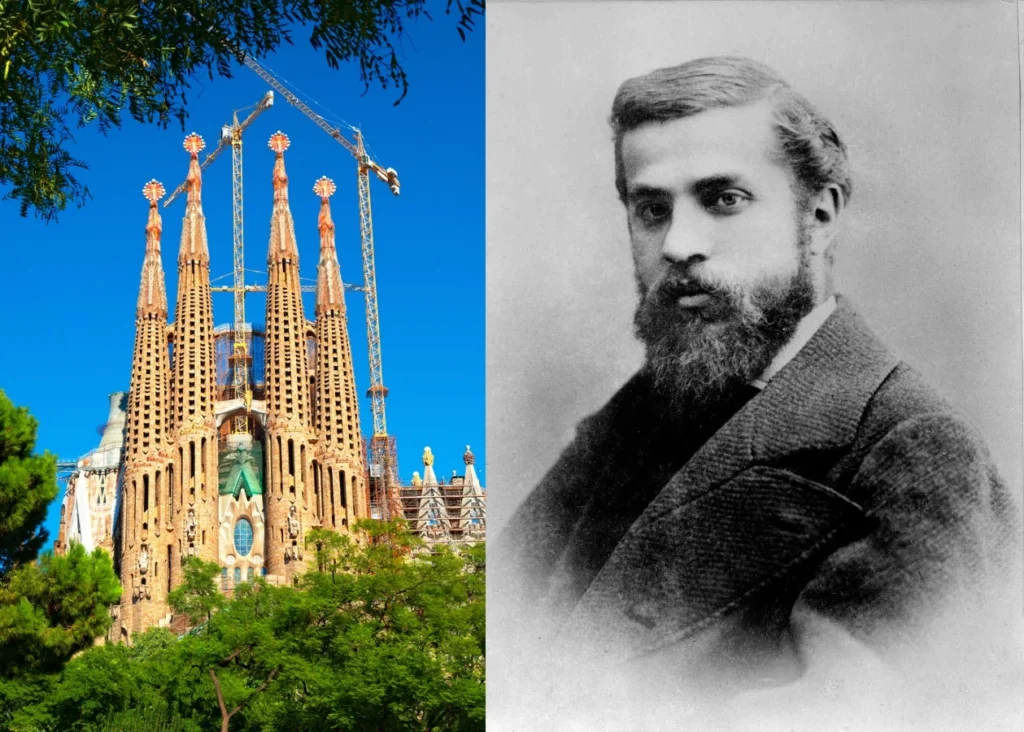
Great art must cost. When Gaudí was asked how long it would take to build Sagrada Familia, he answered: “My customer is not in a hurry.” He began working on it in 1882, and it’s still unfinished. Just like we are unfinished. The only reason to work on something is because it works on you.

Gaudí believed that as he worked on his temple, his temple worked on him. Ultimately, the ONLY reason to create is to be created. Creators create to be created — to come alive. All a creator wants is the experience of being made.

To delegate the creative process to AI is to miss out on the joy of mothering God into the world. We don’t want the pains of bearing the sacred in our womb — yet what is created cheaply will always feel cheap.

“What we obtain too cheap, we esteem too lightly: it is dearness only that gives every thing its value.” — Thomas Paine

The ultimate question is: how much of our joy are we willing to delegate? C.S. Lewis famously noted:

“We all want progress. But progress means getting nearer to the place where you want to be. And if you have taken a wrong turning then to go forward does not get you any nearer. … In that case the man who turns back soonest is the most progressive man.” — Mere Christianity

Are we any nearer to our goal — the experience of joy — when we refuse to take the pains of building our temple? Modern technology does not make us happy; it gives us hype. It promises progress but delivers regress — for true progress means moving closer to our goal, not farther away from it.

When it comes to joy, cheap and fast are regress. If we desire a fig, we must give it time. Joy is a fruit — the fruit of being made through the work of our hands.
When we bear the cost, we create something of value; when we chase what is cheap and fast, we are slowly being unmade.

He who turns back soonest is the most progressive man.

Buy on Amazon

Buy on My Website