
What did Carl Jung say about Jesus? “Your vision will become clear only when you can look into your own heart. Who looks outside, dreams; who looks inside, awakes.” — Carl Jung
For as long as we see evil “out there,” we remain asleep. The moment we recognize it within ourselves, we awaken.
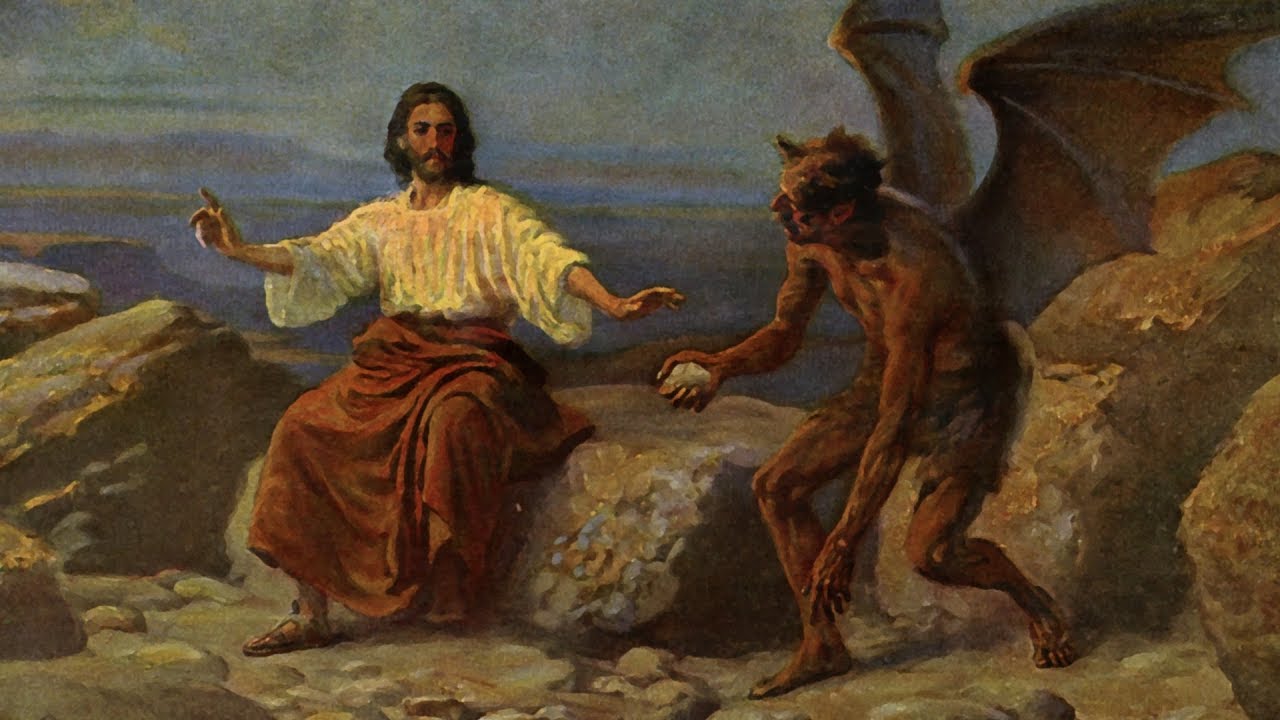
According to Carl Jung, Jesus’s temptations in the desert represent an inner struggle more than a confrontation with an external enemy. Being fully human, Jesus was tempted in every way, just as we are, yet without sin. We sin because we sleep; He did not, because He was awake.
In Jung’s interpretation, Jesus overcame each temptation by becoming conscious of who He was.
In the first temptation —“If you are the Son of God, turn these stones into bread” —the devil invites Him to manipulate physical reality. Feed yourself, don’t live in lack. You are hungry. You can reshape reality to overcome your poverty.
Here, the devil plays on one of the deepest human fears — the fear of going without, the fear of being separate from the Source. When we believe we are separate from the Source, that we don’t have enough, we embark on a journey to “more,” which never ends.
This insatiable desire for more is a symptom of sleep — a sign that we are unconscious of our unity with God. Jesus responds by “eating the true bread from heaven” right there in the wilderness. What did He eat? The will of God. “My food is to do the will of Him who sent Me and to finish His work” (John 4:34).
In John 4:34, He was hungry and thirsty before speaking with the woman at the well — and afterward, mysteriously, He was not. The disciples asked, “Who brought Him food?” No one did. He had enough. Always. We all know this experience: when we are seized by true enthusiasm — literally, en-theos, “in God” — hunger disappears.
The second temptation is about becoming special: “If you are the Son of God, throw yourself down; for it is written, ‘He will command His angels concerning You.’” We all feel this pull. We all want to be singled out, placed on a pedestal as someone exceptional.
Yet, Jesus says that putting God to the test means you don’t believe that you are special already. When we crave specialness, we confess that we do not feel it. We have not heard the heavens open, nor seen the dove descend, nor heard the voice: “You are My beloved Son, in whom I am well pleased.”
The last temptation is the most insidious: save the world by bowing down to the devil. “I can give you the power to end all injustice, all wars, all suffering, all poverty, and make everyone happy — you will be the Savior of the world by establishing your perfect order.
No need to die — you can bring heaven to earth, usher the golden age of humanity this very minute, and make the lives of millions better. Just bow down and bring the necessary sacrifices. Jesus replies, in essence:
“You know the power of force but not the power of a seed. Violence and power are opposites. Violence is sterile — it breeds only more violence. But a seed, when it dies, bears fruit a hundredfold. Worship God alone — for the smallest of seeds holds the true power that transforms the world from within.”
What the devil desires the most is for us to find some external devil to fight with. When we do, we never recognize those same three temptations at work within ourselves each day.
To fight an external devil is to remain asleep; to expose the lies of the inner one is to awaken.