How Did Aristotle View Matter? The Forest Beneath All Forms

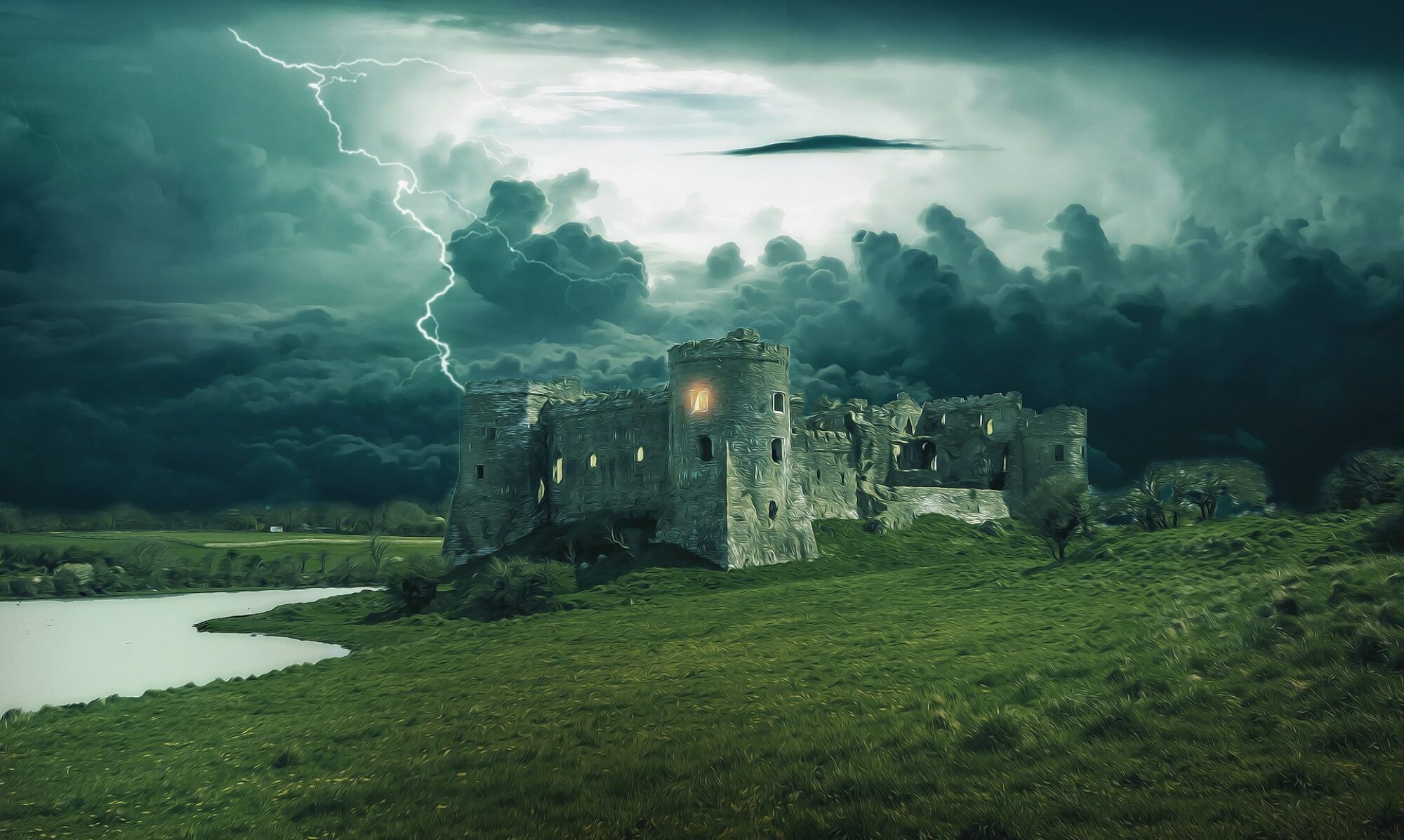
How did Aristotle view matter? Aristotle’s main Greek word for matter is ὕλη (hýlē). Interestingly, hýlē originally meant wood, timber, or forest — the raw stuff one builds with. Why would Aristotle choose such a word to name the underlying constituent of all things?

What does wood have to do with matter?

For Aristotle, hýlē represented the potential — not actuality.

“Matter (hýlē) exists potentially, while form (eidos) exists in actuality.” — Metaphysics

In other words, hýlē is matter as potential — something not yet formed. This may well be the reason why the word was later translated into Latin as materia, derived from mater (“mother”). Originally, however, materia also referred to wood or building material, especially timber taken from a tree.

The proximity of materia to mater (“mother”) is not accidental: both hýlē and mater point to that which gives birth, nourishes, and brings forth. For Aristotle, wood is the most fitting metaphor for potentiality.

Just as a mother brings a person from potentiality into actuality — not by imposing a shape from without, but by allowing form to emerge from within — so wood (hýlē) represents something waiting to be shaped. Matter is not dead or mechanical, not a mere standing reserve.

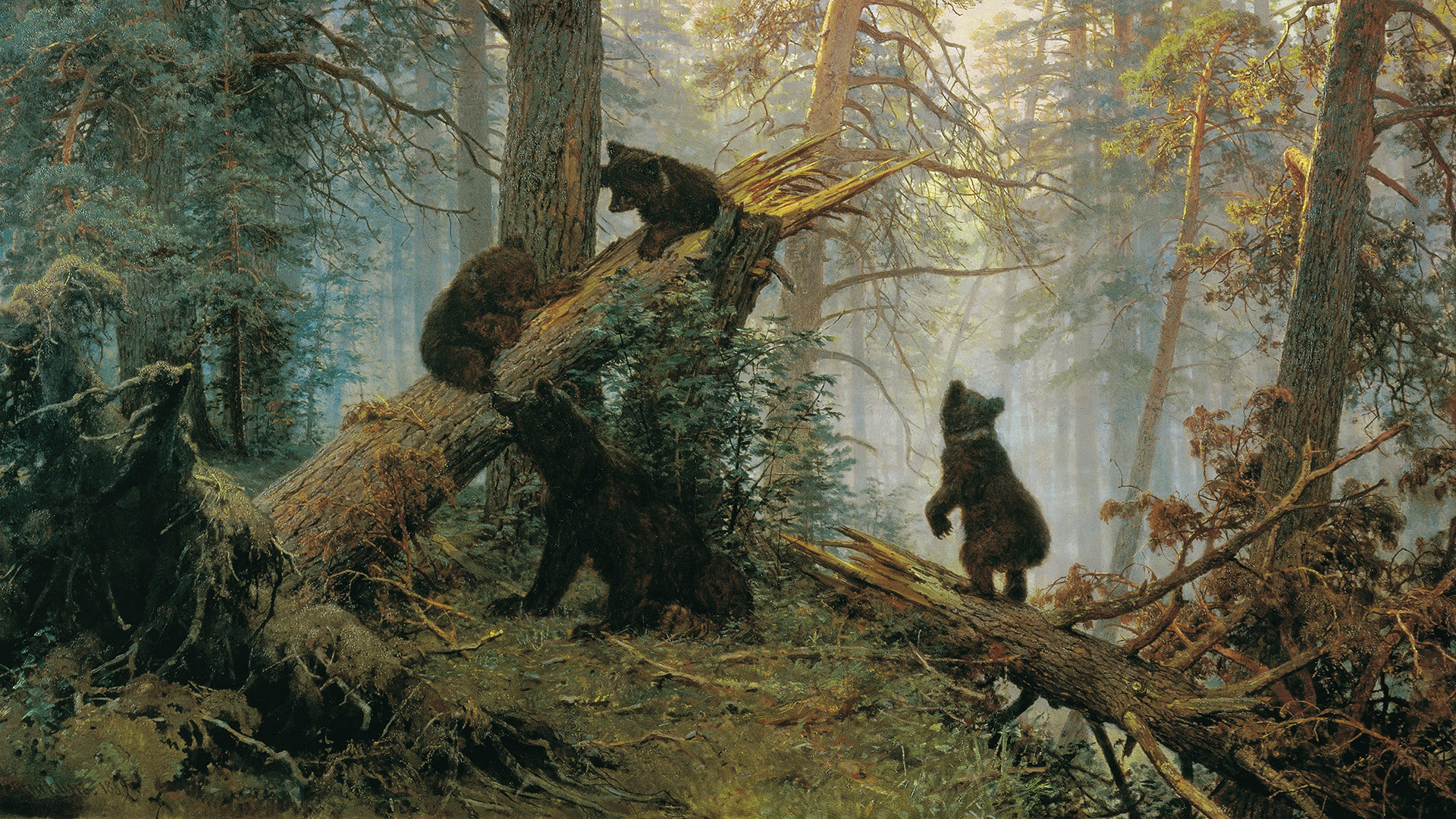
It is something living that grows and reveals its potential in various forms. The ancients saw matter not as something we shape but as something that shapes us. Wood is not something we grow; it is something that grows us. That is why the first thing God did after creating Adam and Eve was to plant a garden in the East.

God knew that humans could realize their potential only among living things. It was the Garden that shaped Adam, not vice versa. The Garden was the womb that would shape Adam into the person he was made to be. As Adam tended the Garden, the Garden tended Adam. Adam grew the Garden, and the Garden grew Adam.

Humans grow only in the garden — that’s why we have kindergartens. We must have “adult-gardens” as well. That is what Elder Amphilochios (Makris) of Patmos must have felt when he told people, after receiving their confession, that their penance was to plant a tree.

Curiously, older descriptions of Patmos note that the island historically had very few trees. Today, there are areas of pine, tamarisk, cypress, mastic, and other trees growing naturally and in groves. The island is turning into a garden.

If you want to grow, you must grow something. Resilience to evil comes to those who, like hobbits, “love all things that grow.” The only way to overcome evil is to be rooted in the soil of the earth — which is “deeper magic.”

As St. Amphilochios used to say to his many disciples:

“Do you know that God gave us one more commandment, which is not recorded in Scripture? It is the commandment “love the trees.” When you plant a tree, you plant hope.”

What is the Difference Between Facts and History

What is the difference between facts and history? When I read my history textbook back in school, I often thought: Gosh, there are so many facts about this or that person or event, but so little story. Isn’t history supposed to be a story?

For some reason, I felt that facts ought to cohere into a story. They didn’t.

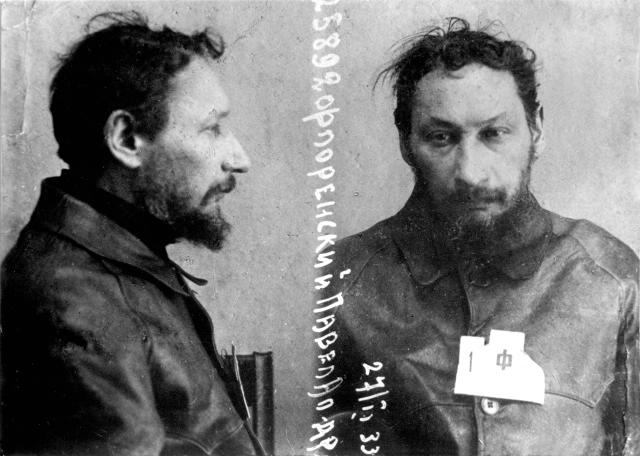
The same thing happened just yesterday after I read Pavel Florensky’s biography on Wikipedia. The article lists many “historical” facts about his life, yet somehow misses the point of who he was entirely. Speaking of his last years before his execution in 1937, it states:

“On November 15, 1934, he began working at the Solovetsky camp iodine production plant, where he focused on the extraction of iodine and agar-agar from seaweed and patented four scientific innovations.”

The passage almost sounds as if he was simply assigned this work by the authorities. He wasn’t. It was his conscious choice.

Researching and extracting iodine from seaweed allowed Florensky to remain spiritually alive and sane in a death camp. He knew perfectly well that Solovki would most likely become his grave, and so he chose to pursue something that filled him with life. And he succeeded. Everyone who met him there was astonished by how much life this man radiated in the face of death.

Wikipedia missed the most essential thing — the Wonder he perceived, embodied, and sought in all things.

Four months into his term, he wrote to his son about the mysterious beauty of permafrost:

“What resulted were fairytale-like caves made of the purest crystal ice — radiant ice, fibrous ice, white ice, and at the bottom, reddish-brown, yet completely transparent… I don’t have the ability to describe how beautiful it is, nor can I draw it. One day, you’ll see a series of sketches of the columns and other details, but even those sketches don’t come close to conveying the beauty of these caves. I doubt that any artist could truly capture it — it’s too difficult a task. It’s better to read fairy tales.”

This passage tells us more about Florensky than all the facts combined. Why?

Because history does not consist of facts. The word history comes from the Ancient Greek ἵστωρ (hístōr), meaning a wise man or a witness. History is the story of a witness.

To know history, you must have seen something — physically or spiritually (or both). History is not so much the retelling of past events as it is the testimony about something seen. The “history” in my school textbook was not history in this proper sense. It did not consist of stories told by witnesses. It was a compilation of facts: who did what, when, how, and why.

Facts without vision do not make history. Witness does.

What was Pavel Florensky like? Reading Wikipedia is not enough. In fact, it leads one astray. To know him, I must become a witness to his life — by reading his own books or the accounts of those who truly witnessed him.

hístōr is someone who sees. I must see Pavel Florensky inwardly while reading his words. Only then will I know true history. Facts are part of history, but they do not constitute it. The most important moments of history rarely make it to the official record. Wonder cannot be archived.

Florensky did not remain spiritually alive in Solovki by accident, nor did he “labor” there in the usual sense of the word. He bore witness — to beauty in permafrost, to meaning in degradation, to life where death expected to reign alone.

That is history indeed.