
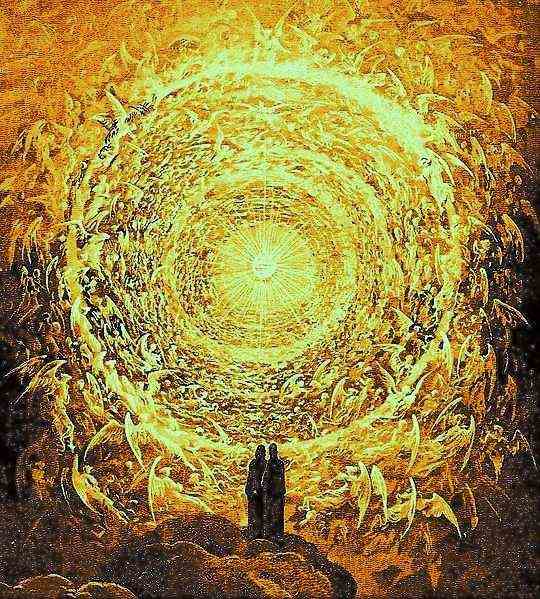
How do you conquer the ego? The French philosopher Jacques Lacan says,
“What determines me, at the most profound level, in the visible, is the gaze that is outside.”
According to Lacan, it is highly curious that human behavior and self-perception drastically change the moment we become aware of being looked at. An outside gaze, when caught, changes us profoundly. No one remains the same when they know they are being seen.
Why?
Because we are revealed as human beings only when we are seen. The Gaze is the ultimate revelatory act. Dante says of Beatrice’s eyes in Vita Nuova:
“Whenever and wherever she appeared, by virtue of my hope in her marvelous greeting [gaze], no one could be my enemy; on the contrary, I became possessed by a flame of charity that made me forgive whoever had hurt me, and were someone to ask me any question at that moment, my response would have been, simply, “Love,” my expression clothed in humility.”
Dante had many enemies and yet, the moment he caught her gaze, no one in the world could remain his enemy. Suddenly, in the twinkling of an eye, all inner struggle subsided, and humility arose — without struggle, as a response to the gaze. What Dante saw in that gaze was different than what Petrarch encountered in Laura.
For Petrarch — and many others — their earthly love was a distraction from God. Petrarch’s inner struggle was precisely that Laura competed with God for his heart. For Dante, Beatrice was not a distraction from God but theophany. There was no competition. Through her eyes, God revealed His own gaze.
What happened in that gaze? Suddenly, unexpectedly, Dante felt exalted and humbled at the same time. True humility always arises as an inner response to being seen. False humility is an attempt to bring oneself down without the awareness of being seen.
Such attempts are never successful. In fact, they only inflate the ego further.
True humility is a profound paradox: we feel most humble when we feel most exalted — in the Divine Gaze. When we catch that Gaze, we know we are singled out, made precious, chosen. That Gaze lifts us to the seventh heaven.
At that moment, the ego dies a quiet and happy death. We no longer need to establish or exalt ourselves. We already feel exalted to the highest heights. Unless we are exalted by the Other, we will inevitably attempt to exalt ourselves. The moment we become aware of how we are being looked at, the ego falls silent.
The Gaze humbles us by revealing who we truly are. This is the most humbling experience of all: to discover who we are in the eyes of the Lover. The Gaze humbles by extolling.
C.S. Lewis said:
True humility is not thinking less of yourself: it’s thinking of yourself less.
But it is impossible to think of yourself less without first being exalted by the Gaze. The Gaze lifts us to such heights that all our attempts at self-exaltation suddenly appear absurd. We give them up instinctively. It simply makes no sense to think much of oneself once we become aware of how we are being seen.
The paradox of humility is that it’s the flip side of being exalted — by the loving gaze. People think much of themselves only because they are unaware of being seen. The ego exalts itself precisely when it does not know how greatly it has already been exalted.
It puffs itself up and seeks to grow ever larger until one day — somewhere in the middle of the Ponte Vecchio — it lifts its eyes and is suddenly smitten by how it is being looked at. In that instant, it begins to laugh at its own efforts at self-exaltation.
All human attempts at self-exaltation are ridiculous, because if only we knew how greatly we have already been exalted, we would exclaim with Dante: “I am possessed by a flame of charity,” and we would answer every question with a single word:
Love.