What is the Difference Between Facts and History

What is the difference between facts and history? When I read my history textbook back in school, I often thought: Gosh, there are so many facts about this or that person or event, but so little story. Isn’t history supposed to be a story?

For some reason, I felt that facts ought to cohere into a story. They didn’t.

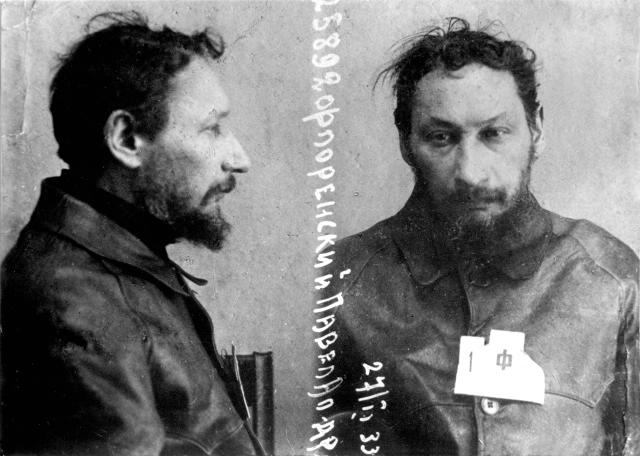
The same thing happened just yesterday after I read Pavel Florensky’s biography on Wikipedia. The article lists many “historical” facts about his life, yet somehow misses the point of who he was entirely. Speaking of his last years before his execution in 1937, it states:

“On November 15, 1934, he began working at the Solovetsky camp iodine production plant, where he focused on the extraction of iodine and agar-agar from seaweed and patented four scientific innovations.”

The passage almost sounds as if he was simply assigned this work by the authorities. He wasn’t. It was his conscious choice.

Researching and extracting iodine from seaweed allowed Florensky to remain spiritually alive and sane in a death camp. He knew perfectly well that Solovki would most likely become his grave, and so he chose to pursue something that filled him with life. And he succeeded. Everyone who met him there was astonished by how much life this man radiated in the face of death.

Wikipedia missed the most essential thing — the Wonder he perceived, embodied, and sought in all things.

Four months into his term, he wrote to his son about the mysterious beauty of permafrost:

“What resulted were fairytale-like caves made of the purest crystal ice — radiant ice, fibrous ice, white ice, and at the bottom, reddish-brown, yet completely transparent… I don’t have the ability to describe how beautiful it is, nor can I draw it. One day, you’ll see a series of sketches of the columns and other details, but even those sketches don’t come close to conveying the beauty of these caves. I doubt that any artist could truly capture it — it’s too difficult a task. It’s better to read fairy tales.”

This passage tells us more about Florensky than all the facts combined. Why?

Because history does not consist of facts. The word history comes from the Ancient Greek ἵστωρ (hístōr), meaning a wise man or a witness. History is the story of a witness.

To know history, you must have seen something — physically or spiritually (or both). History is not so much the retelling of past events as it is the testimony about something seen. The “history” in my school textbook was not history in this proper sense. It did not consist of stories told by witnesses. It was a compilation of facts: who did what, when, how, and why.

Facts without vision do not make history. Witness does.

What was Pavel Florensky like? Reading Wikipedia is not enough. In fact, it leads one astray. To know him, I must become a witness to his life — by reading his own books or the accounts of those who truly witnessed him.

hístōr is someone who sees. I must see Pavel Florensky inwardly while reading his words. Only then will I know true history. Facts are part of history, but they do not constitute it. The most important moments of history rarely make it to the official record. Wonder cannot be archived.

Florensky did not remain spiritually alive in Solovki by accident, nor did he “labor” there in the usual sense of the word. He bore witness — to beauty in permafrost, to meaning in degradation, to life where death expected to reign alone.

That is history indeed.

What Does it Mean to Be Ordinary People?

Sunset at Horsehoe Bay, Magnetic Island, Queensland, Australia. A 2-section panorama of twilight colours and crepuscular rays, taken with Canon 60Da and 10-22mm lens.

What does it mean to be ordinary people? G.K. Chesterton famously said,

“The most extraordinary thing in the world is an ordinary man and an ordinary woman and their ordinary children.” G.K. Chesterton

Dante was regarded as a poeta popolare—a poet of the people—and he took pride in that title. He was read and loved by ordinary people rather than intellectuals. When I first read The Divine Comedy in the early 2000s, most of it went over my head—except for a few haunting images from Inferno.

In the 14th century, however, ordinary Florentine citizens gathered money to establish a Dante cathedra (a professorship dedicated to Dante’s works) at Santa Maria del Fiore. Giovanni Boccaccio was the first one to occupy that cathedra and read Divine Comedy to common city folk passing through the cathedral on the way to work.

Somehow, culture has little to do with intelligence but everything to do with mysticism. Pure intellect is incapable of the one thing from which culture emerges—love. Intellect shuns emotion and filters out what it cannot see, touch, calculate, or predict.

“If it can’t be measured, it doesn’t exist.” Intellect is very good at constructing but very bad at creating.

“The whole difference between construction and creation is exactly this: that a thing constructed can only be loved after it is constructed; but a thing created is loved before it exists.” Charles Dickens

Ordinary people are extraordinary because they are lovers. They are never professionals but always amateurs (from Latin amor — love). They love, and that’s why they are capable of creating. What is not loved, cannot be created — it can only be constructed. Constructed reality is artificial. It lacks the Love and Life that all mystics delight in, because they tread on earth and wander in fairyland at the same time.

“The ordinary man has always been sane because the ordinary man has always been a mystic. He has permitted the twilight. He has always had one foot in earth and the other in fairyland.” G.K. Chesterton

Ordinary people permit twilight. They understand that what they see are particles of light scattered through the atmosphere at a certain angle. And yet, they see twilightThey are mystics; in the scattering of light, they see marriage between heaven and earth. For them, there is no contradiction.

Their mystical gaze pierces through the veil of the physical as an arrow of Cupid pierces the heart with love and desire. They understand that to truly dwell on earth, you must have one foot in fairyland. Without fairyland, there is no earth. With fairyland, there is both heaven and earth.

God himself is a lover, not a professional. He loved twilight before it emerged—that’s why it emerged. The ordinary person, through their love of twilight, recognizes the essence of twilight. Particles of light is not what it is but only what it is made of. To love is the highest form of sanity. To be in the right mind is to delight in the twilight — in everything where heaven meets the earth.

Check out my new book

What is the Mystery of Motherhood?

Image Courtesy

What is the mystery of motherhood? When you read about the “hand of God,” it’s natural to imagine some sort of hand. Even though God is Spirit, we are told he has hands, feet, fingers, ears, eyes, face, etc. Apparently, such anthropomorphisms carry profound significance. Eventually, we realize that spiritual hands, feet, arms, and faces truly exist — they are realities of which our human hands, feet, arms, and faces are but shadows.

The phenomenon of God’s spiritual hand was beautifully captured by George VI, King of England, who said at the beginning of WWII that he had asked God about the future of his people and God replied,

“Go out into the darkness and put your hand into the hand of God.
That shall be to you better than light and safer than a known way.”

Somehow, we all know what a “spiritual hand” is. Most of us experienced it as children. Remember walking into a dark room as a little boy or girl, terrified of the boogeymen, ghosts, and monsters hiding in the shadows? The fear was overwhelming—until the moment our mother took us by the hand. Suddenly, we found the courage to go in.

Deep down, we knew that our fragile mother could not possibly defeat all the fire-breathing dragons that lurked under the bed. But the moment we took her hand, we miraculously felt safe. We were utterly certain that somehow, she would prevail. She is the mother, after all.

The phenomenon of the mother’s hand is purely spiritual. It’s paradoxical too — on the one hand, we know the mother cannot possibly prevail against such odds, and yet we feel totally secure as if she had hidden powers. As if there was more to her than met the eye. As if her gentle hand was a spiritual hand.

What is a spiritual hand? It is a hand that holds a power far beyond what it may appear to possess. It is infinite. It takes up certain physical space, but its reach is boundless and all-encompassing. True victory over fear is not when we can predict the future and make plans A, B, and C, but when we have the “hand of God” experience embodied in some material form.

We have had it in childhood when we held our mother’s hand. But this isn’t the only way to encounter it. This experience can come to us in many ways and forms. God’s spiritual hand is revealed through some physical medium. Spirituality is always revealed through physicality. “The Word became flesh and dwelt among us.”

The hand of God is present here, too. Its mystery is always embodied in something tangible. We can see it in the smiles of our friends gathered around a dinner table. We can hear it in the rustling of autumn leaves beneath our feet. Or we can feel it when gazing into the eyes of a saint.

Its effect is irresistible — it calms us down and relieves our fears. God’s spiritual hand is everywhere, but it must be recognized. It always hides behind humble appearances. Its power is immense but hidden. It invites us to look for it. To whom has God’s hand been revealed?

“To whom is the arm of the LORD revealed? For he shall grow up before him as a tender plant, and as a root out of a dry ground: he hath no form nor comeliness; and when we shall see him, there is no beauty that we should desire him.”

The mother’s hand is the ultimate embodiment of the mystery of God’s hand. It is something humble and hidden in the physical world that nests infinite power. When we experience it, we become infinitely bold and happy. When we hold that hand, we can walk through any darkness.

We don’t need certainty or knowledge of what lies ahead. We can step out into the unknown because we have something better than light — the experience of being held.

Get my 3-book Mystical Vision of the Inklings series at 50 off!