How is a War Won?

How is a war won? Two years into the war, the chief psychiatrist of the Rehabilitation Center “Unbroken” in Lviv, Ukraine, said to the volunteers who wished to work 12-hour shifts:

“If you work yourselves to death for twelve hours a day, you’ll end up in the psychiatric ward as my patients.”

These people were driven by the most natural instinct we all feel in times of crisis — to prioritize duty over joy. When you see so much need and suffering around you, you think: “I will put off joy and first do what must be done.”

And yet, according to the Ukrainian philosopher Alexander Filonenko, this is a grave mistake. Those who make duty their first priority never truly fulfill it. Duty is never accomplished from a mere sense of duty. Those who try to “white-knuckle” adversity inevitably fail.

Interestingly, after the war began, bookstores in Ukraine quickly ran out of books by the Stoics. The common misconception about the Stoics is that they teach how to endure adversity through willpower. It is not true.

Stoicism is more about joy than willpower.

“The happiness of your life depends upon the quality of your thoughts.”
— Marcus Aurelius, Meditations 5.16

Stoicism is not so much about self-denial as about changing your thoughts. Stoics are not the stone-faced people. They’re those who actively work on changing their thinking.

“Men are disturbed not by things, but by the views they take of things.” — Epictesus

The only way to endure a crisis is to do the most counter-intuitive thing — prioritize joy over duty. The only way to survive hell is to keep enough visions of heaven before your eyes. Those who focus on duty never fulfill their duty. Those who focus on joy cannot help but fulfill it.

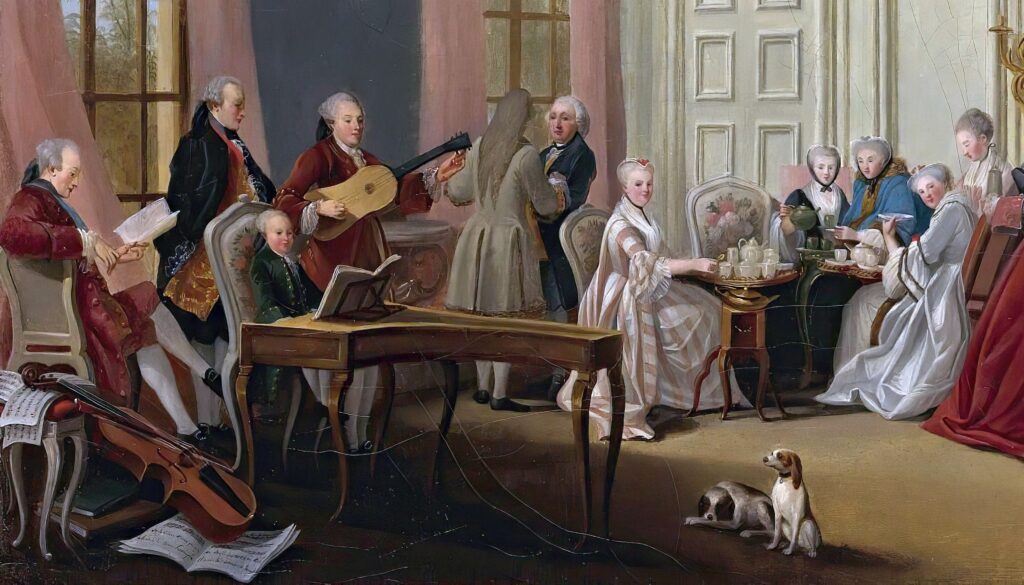
What do war-injured people need the most? Medical care? Supplies? Prosthetics? “UNBROKEN” answers: beauty. Beauty is the only force that revitalizes the soul and helps the body heal. It is the only power that can lift a person from the ashes. That is why UNBROKEN invites orchestras, ensembles, and individual musicians to perform for patients right inside the rehabilitation center.

So far, they have hosted the Academic Symphony Orchestra of the Lviv National Philharmonic, held various concerts connected to veteran and wounded-soldier rehabilitation, and, in one 2023 performance, classical musicians played beside wounded soldiers. And more continue to come.

To survive, one must thrive. Survival can never be achieved by aiming at survival. When our world crumbles, we must do the most counter-intuitive thing — turn our gaze to Beauty. Beauty is the only thing that truly “changes our thoughts.”

“The soul becomes dyed with the colour of its thoughts.” — Marcus Aurelius

What is the color of my soul today? It takes on the color of my thoughts — always. No war is won by endurance alone. It is won when I immerse my soul in the colors of joy and allow meaning to transform my thoughts.

What Was Obi-Wan’s Mistake with Anakin?

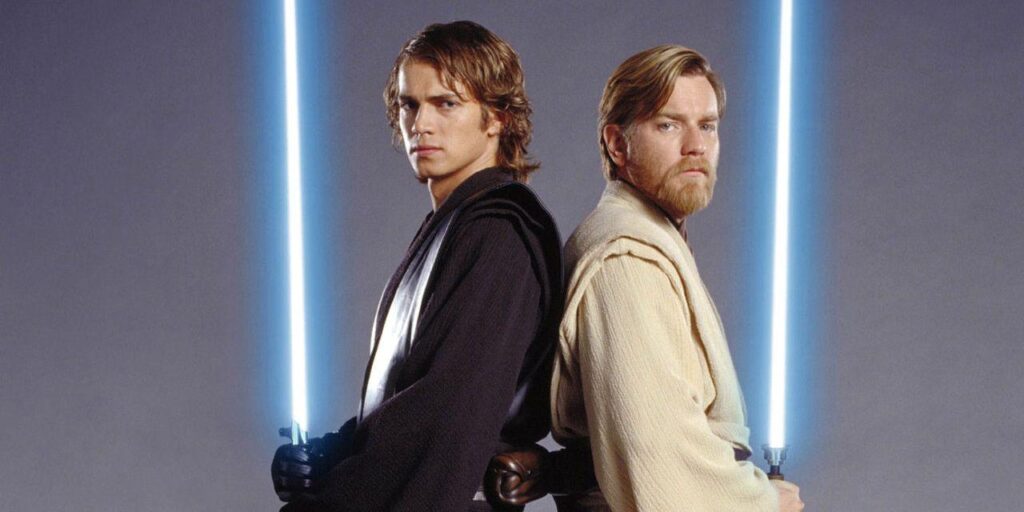
What was Obi-Wan’s mistake with Anakin? Speaking of Anakin, Obi-Wan Kenobi once said to Qui-Gon: “The boy is dangerous. They all sense it. Why can’t you?”

Qui-Gon replied: “His fate is uncertain; he is not dangerous.”

Surprisingly, they were both right. Obi-Wan foresaw Darth Vader emerging from Anakin; Qui-Gon foresaw Anakin emerging from Darth Vader.

And yet, Obi-Wan’s early view of Anakin as “dangerous” shaped the entire trajectory of their future relationship. Obi-Wan failed to recognize Anakin’s deepest human need — the need for a father. And he failed to become that father when Anakin was his Padawan. Why? Is it because Obi-Wan himself grew up without a father?

Obi-Wan could hardy remember his parents. In Star Wars canon, Obi-Wan Kenobi’s father is not named. At twelve, Obi-Wan became Qui-Gon’s Padawan, and for a while, their relationship was tense — Obi-Wan was rigid and rule-abiding; Qui-Gon spontaneous and free-spirited.

Obi-Wan kept the rules; Qui-Gon followed the ways of “the living Force.” Eventually, they came to appreciate each other but sharply disagreed about Anakin.

Obi-Wan: “He’s dangerous.”

Qui-Gon: “He is the Chosen One.”

Even after Qui-Gon’s death, Obi-Wan saw Anakin as “dangerous.” He agreed to train the boy out of duty and respect for his fallen master, but he never saw him through Qui-Gon’s eyes — as the Chosen One. Obi-Wan didn’t choose him. That’s why Anakin never felt chosen.

Obi-Wan failed to see what every boy craves the most — for someone to see him as the Chosen One.

True fathers always see their child as the Chosen One. In their gaze, the child becomes his true self. Anakin didn’t find it in Obi-Wan’s eyes, and he turned to Palpatine for answers. When a child does not feel chosen, he will seek identity in the darkest places. Children do not want dutiful love. They reject it — and the one who dutifully gives it.

With Luke, Obi-Wan was different. He waited for years on Tatooine until Luke came of age — not out of obligation, but out of hope. By the time they met, Obi-Wan had clearly chosen him. And Luke felt that from the very first moment they met — chosen.

Obi-Wan never criticized Luke’s fear, impatience, or ignorance as he once scolded Anakin. Instead, he bestowed upon him a mythic identity by telling him the words Anakin had never heard: that he was the son of a Jedi Knight.

Obi-Wan had vowed to train Anakin — and failed. Twenty years later, he finds Anakin’s son to fulfill his promise. This time, he does it not as a reluctant mentor but as the father Luke desperately needs. And Luke FEELS chosen.

This is why, when Palpatine tempts Luke with the same dreadful choice he once offered Anakin — Turn to the dark side, or watch your loved ones die —Luke does not cave.

Palpatine succeeded with Anakin because Anakin did not have an identity and was desperately trying to find one. He failed with Luke because Luke had an identity — the one imparted by Obi-Wan.

Only those who FEEL CHOSEN can overcome the Evil One. Unless I have a father-imparted identity, I will cave. The role of the father is to give you a name — something you cannot lose. Luke knew who he was — the Chosen One — and he redeemed his father in himself.

The moment Luke put down his lightsaber, Darth Vader died and Anakin resurrected. At that moment, Qui-Gon’s prophecy about Anakin came true:

“He is the Chosen One.”

How Do Abusive Fathers Affect Their Sons?

How do abusive fathers affect their sons? Svetlana Alliluyeva, Stalin’s daughter, spoke in a BBC interview in the 1980s about her father’s early childhood. Joseph Stalin was born into the home of a poor Georgian peasant, Besarion Jughashvili, who was a violent alcoholic.

He beat his wife, Keke, regularly, and he beat young Joseph “mercilessly.” According to Svetlana, the boy once tried to defend his mother by throwing a knife at his father — but missed.

While watching the interview, I felt an uncanny sense of déjà vu. Ivan the Terrible’s childhood was surprisingly similar. After the death of his both parents, the boy fell into the hands of the feuding boyars who neglected him and often left him without food and clothing.

Then another story came to mind — that of the Polish journalist Krystyna Kurczab-Redlich, who conducted independent research into Vladimir Putin’s past. After speaking directly with his mother, who was still alive in the 1990s, she published a book containing details that never entered the official narrative.

To cut the long story short, Vladimir grew up essentially without a father. His mother later married a Georgian man who adopted him. This stepfather, too, was a violent drunkard. He beat both the boy and his mother regularly. Young Vladimir had to learn judo and other “survival” techniques simply to protect himself and her.

Eventually, because of the beatings, his mother sent him to her maternal grandparents in Saint Petersburg.

What happens to a boy’s psyche when his father — the one who is supposed to protect him — instead forces him into daily survival mode? Unconsciously, the child develops the deep, instinctual desire to “kill the father” and take his place.

This is what Freud meant by the Oedipus complex. Freud used the Greek myth of Oedipus, who unknowingly killed his father and married his mother, as a model for psychological development in boys. According to him, every boy unconsciously wants to kill his father and marry his mother.

Is this true? Partly. What Freud never emphasizes is that this “desire to eliminate the father” becomes acute precisely in boys who seek a bright father in their earthly father — but find none.

When a father is absent, violent, drunk, or indifferent, a boy experiences a collapse of the inner world. He seeks light but finds only darkness. Deep resentment settles in his heart. Without realizing it, he begins to dream of replacing the father — in any way possible.

We all instinctively know what a “bright father” is supposed to be. That’s why the Romans named their chief god Jupiter. The Latin “Iūpiter” means Father Jove. The first part of the word —  — is derived from the Proto-Indo-European “dyew” which means (to be bright, day sky), and “piter” is related to the Latin “pater” (father).

Jupiter, the largest planet in the Solar system (and the biggest bright spot in the night sky also known as the Great Red Spot), was associated by the ancients with the Father. In ancient consciousness, a father is the one who shines. A father is the light of your day. In Roman lore, Jupiter, Jove, is the epitome of joviality — he is full of joy and the energy of being.

When a boy never encounters that kind of brightness in his earthly father, he grows resentful — and profoundly unsure of himself. He tries to compensate through force, aggression, and the pursuit of what he imagines masculinity must look like. The result is not strength but a brittle, armored soul.

This could easily have been the fate of Telemachus, Odysseus’s son — but for Athena.

Telemachus grew up without a father. Odysseus had left for the Trojan War when Telemachus was still a baby and had been gone for twenty years. As a result, Telemachus became an uncertain and inexperienced young man, watching helplessly as countless suitors courted his mother, Penelope, in his father’s absence. He longed to save her — desperately, instinctively — but didn’t know how.

Then, Athena appeared to him, disguised as a Mentor, and inspired him to set out on a journey to find his father. Eventually, Telemachus learned that his father, Odysseus, was alive but trapped on the island of Calypso. Through his reunion with his father, Telemachus transforms from a passive, uncertain youth into a confident and capable young man.

Curiously, Athena — a goddess of wisdom and war — does not advise Telemachus to become a man of war to “protect his mother” or to compensate for the loss of his father. That would have been a false masculinity. In her wisdom, she tells him to go and look for his father. Ancient stories are infinitely wise.

The disease of dictatorship is often rooted in fatherlessness — when a child cannot find the “bright father” in his earthly father, he “kills” him in his heart. To reverse this curse, there must be someone wise enough in his life who can nudge him to look up — to peer intently into the night sky.

There, in the impenetrable darkness, there is always a bright spot — someone who embodies the jovial Father in Heaven and beckons him to a life that’s worth living.

What is the Most Forgotten Language According to C.S. Lewis?

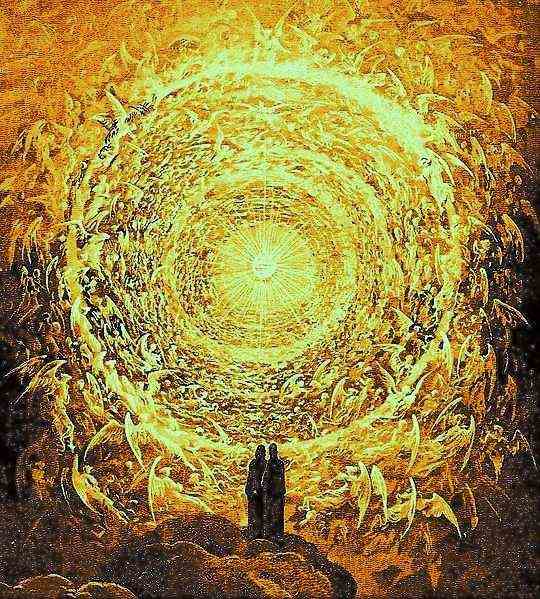
Image Source

What is the most forgotten language? In C.S. Lewis’s Space Trilogy, the original universal language spoken by all rational beings is called Old Solar, or Hlab-Eribol-ef-Cordi.

It is not a human language — it is primordial speech shared across all the planets except the Earth, Thulcandra. Ransom explains:

“That original speech was lost on Thulcandra, our own world, when our whole tragedy took place. No human language now known in the world is descended from it.” — Perelandra

What is Hlab-Eribol-ef-CordiLewis describes it as an ancient, pre-Fall tongue shared by angels (eldila) and rational beings. It is highly musical, highly inflected, and deeply meaningful.

How did the pre-Fall language sound? On the Earth, we have lost that unified speech. None of our languages descend from it directly. In Lewis’s imagery, the pre-Fall language was Solar — a speech originating from the Sun, as he suggests in his poem “The Birth of Language.”

In that poem, every word of the original language is infused with the careering Fires of the Sun — the Divine Logos — echoing the primordial Word: “Let there be…” Each word brings forth the reality it names. Can we glimpse that language today? Lewis suggest that the only power that can resurrect something of that essential speech is “true verse.”

Why? Because only in poetry do we return to the Divine poeisis — the primordial Speech that created the worlds. Lewis says:

Yet if true verse but lift the curse, they [words] feel in dreams their native Sun.

Every time we strike a true metaphor, words momentarily “dream” of their home — the Sun. On this side of the Fall, the only way to hear the Solar Speech is through mind-shifting poetry, the kind that lifts language back toward its unfallen state. C.S. Lewis hints at this in That Hideous Strength when he describes the descent of Mercury:

“This was Language herself, as she first sprang at Maleldil’s bidding out of the molten quicksilver of the star called Mercury on Earth.”

For Tolkien, the most powerful metaphor for Divine Speech is… water. Water allows us to hear the Old Solar as nothing else under the sun:

“And it is said by the Eldar that in water there lives yet the echo of the Music of the Ainur more than in any substance else that is in this Earth; and many of the Children of Ilúvatar hearken still unsated to the voices of the Sea, and yet know not for what they listen.” — The SilmarillionAinulindalë

What do we listen to when we hearken, unsated, to the pattering of rain on the windowsill? We attune to the essential speech that created the worlds. We lean into the faint resonance of the Music of Ilúvatar condensed into matter. For it is said that Ulmo — the Ainu through whose thought and song Ilúvatar shaped the waters of Arda— was “most deeply instructed by Ilúvatar in music.”

“Now to water had that Ainu, whom the Elves call Ulmo, turned his thought; and of all most deeply was he instructed by Ilúvatar in music.” — The SilmarillionAinulindalë

Among the Ainur, Ulmo was the one whom Ilúvatar instructed most deeply in music, and therefore in water the echo of that Music lives more than in any substance else that is in this Earth. This could be the reason why the Nazgûl and other evil creatures in Middle-earth hate and fear water — it rings with the song of Ulmo.

We all long to hear Old Solar because it is true speech — saturated with the Music of Creation from which our being arose. Though this language has long been forgotten on Earth, its life-giving presence still haunts us — in poetic utterance, in moments of heightened perception, and most vividly in the contemplation of water, which embodies that primal Speech as nothing else under the sun.

When we listen to the sound of water, we do not know for what we listen, yet we listen for it all the same — for in it we hear a fading echo of the Speech that uttered the world into existence.

What is the Primary Purpose of Literary Criticism?

What is the primary purpose of literary criticism? Interestingly, in the Book of Judges, “judging” (ש־פ־ט (shafat) is not courtroom work. It’s all about saving and delivering. For example, David exclaims in Psalm 26:1: “Judge me, O LORD; for I have walked in mine integrity.”

Obviously, David wasn’t asking God to judge him as if on trial. He is asking God to deliver him from danger. The English word judge comes from the Latin iūdex, from iūs (right, justice) + dīcere (to speak). A judge is literally “one who speaks rightly”—one who declares the truth of a thing.

But what does it mean to speak rightly about something? For example, before Bilbo had finished composing his poem about Eärendil, Elrond told him they would all get together and “judge” it before their merrymaking.

“Elrond laughed. ‘He [Dunadan] shall be found,’ he said. ‘Then you two shall go into a corner and finish your task, and we will hear it and judge it before we end our merrymaking.”

Does Elrond mean they will gather as a panel to determine whether the poem is “good”? Hardly. That is not what happens. They gather in the Hall of Fire, where Bilbo recites the poem. It has such a profound effect on the listeners that some of them seem transported to another realm, as if under a spell.

When Bilbo finishes, the elves burst into warm applause. One elf says:

‘Now we had better have it again,’ said an Elf. Bilbo got up and bowed. ‘I am flattered, Lindir,’ he said. ‘But it would be too tiring to repeat it all.’

Clearly, this is not “judgment” in the modern sense of criticism. In Tolkien’s usage, to judge means to discern what is good, not to search for flaws.

The modern meaning of “judge” has drifted far from its roots. And the same is true of the word criticize. Today it means “to find fault.” Yet its origin tells a different story.

The word “criticize” comes from the Greek κρίνω (krínō) — to separate, distinguish, discern. In ancient times, “to criticize” meant to penetrate the surface of a thing and see it for what it truly is — to recognize and celebrate its value. True literary criticism is never about criticizing; it’s about loving.

Ironically, the discerning aspect of criticism has been lost. But a true judge is a connoisseur — one who appreciates. A true judge is a lover. To “speak aright” is to discern what is good in this and that — and to celebrate it. Only a lover has the right to judge, because only a lover can truly discern.

When criticism is separated from discernment, it never improves or transforms anyone. A desire to improve awakens only in a heart that feels appreciated. If we look only for what is wrong, nothing changes. If we look for what is right, we become true judges — we speak aright.

Was Bilbo’s poem impeccable? Not at all. He admits it himself when he explains that Aragorn insisted on adding a line about the green stone:

“He seemed to think it important. I don’t know why. Otherwise he obviously thought the whole thing rather above my head, and he said that if I had the cheek to make verses about Eärendil in the house of Elrond, it was my affair. I suppose he was right.”

True criticism is never about pointing out flaws. True criticism is the love of what has been discernedOnly what is loved can ever be improved.

Does Technology Always Mean Progress? The High Cost of Making Things Cheap

Does technology always mean progress? Recently, YouTube served me a video by Julia McCoy titled “AI Just Killed Video Production,” introducing Dzine AI — a new “revolutionary” tool that has, as she claims, collapsed the entire video production industry into a 60-second workflow.

It promises to replace the costly process of traditional video production — hiring a voice actor, an animator, and a video editor — with a $25-per-month subscription.
Surprisingly, the show’s host isn’t Julia herself but her AI clone, generated with Dzine AI. The real Julia appears only at the end.

You can take any image, any character, any style, and make it speak your exact words with perfect lip sync. Bottom line? Cut your costs. Cut your time. Maximize your profit.

When I watched this, a humorous quote from Danny Devito popped up in my mind:

“Artists must suffer for their art. That’s why it’s called painting.”

If you tell an artist that true art can be created without pain, they will cringe. It’s impossible. As Viktor Frankl said, “That which gives light must endure burning.”

Can you imagine Andrei Tarkovsky creating his masterpieces with Dzine AI? For him, the obvious question would be: Why? Why cut costs if the only way to create something worthy in this world is to bear the costs of its creation?

We must experience burning in order to give light. Epictetus revealed the same conundrum:

“No great thing is created suddenly, any more than a bunch of grapes or a fig. If you tell me that you desire a fig, I answer that there must be time. Let it first blossom, then bear fruit, then ripen.”

The joy of art is the joy of being pregnant with whatever you are bringing to life — for nine long months. To cut time short is to give stillbirth. That’s why so much modern art feels dead: it has been created too quickly, and too cheaply.

Great art must cost. When Gaudí was asked how long it would take to build Sagrada Familia, he answered: “My customer is not in a hurry.” He began working on it in 1882, and it’s still unfinished. Just like we are unfinished. The only reason to work on something is because it works on you.

Gaudí believed that as he worked on his temple, his temple worked on him. Ultimately, the ONLY reason to create is to be created. Creators create to be created — to come alive. All a creator wants is the experience of being made.

To delegate the creative process to AI is to miss out on the joy of mothering God into the world. We don’t want the pains of bearing the sacred in our womb — yet what is created cheaply will always feel cheap.

“What we obtain too cheap, we esteem too lightly: it is dearness only that gives every thing its value.” — Thomas Paine

The ultimate question is: how much of our joy are we willing to delegate? C.S. Lewis famously noted:

“We all want progress. But progress means getting nearer to the place where you want to be. And if you have taken a wrong turning then to go forward does not get you any nearer. … In that case the man who turns back soonest is the most progressive man.” — Mere Christianity

Are we any nearer to our goal — the experience of joy — when we refuse to take the pains of building our temple? Modern technology does not make us happy; it gives us hype. It promises progress but delivers regress — for true progress means moving closer to our goal, not farther away from it.

When it comes to joy, cheap and fast are regress. If we desire a fig, we must give it time. Joy is a fruit — the fruit of being made through the work of our hands.
When we bear the cost, we create something of value; when we chase what is cheap and fast, we are slowly being unmade.

He who turns back soonest is the most progressive man.

Buy on Amazon

Buy on My Website

What is True Literacy?

What is true literacy? For the ancients, writing was never something abstract; it was always tangible — engraved in living matter like bark, wood, clay, or stone.

They saw writings in the very phenomena of the world. The idea of using letters to record thought arose from observing the writings already “engraved” in creation. All things are letters — messages inscribed by the divine hand. They contain invisible script.

Interestingly, the word book is etymologically rooted in the Proto-Germanic bōk, which in turn derives from the Proto-Indo-European bhāg(ó) or bhōg, which means beech tree.

In essence, a book is a tree. Why such an association? Is it because the first writing tablets in Europe were made from thin slices of beechwood? Or it is because the ancients intuited a spiritual kinship between the book and the tree?

When you see a message etched into matter, you begin to associate the matter with the message — the visible with the invisible, the word with the wood that bears it.

The entire concept of literacy was born from reading the “letters” written upon every part of the universe. You see divine letters in a beech tree, and the letters become the beech tree.

The Russian word for beech tree (бук) sounds like the English “book.” The etymology of this word is, surprisingly, similar to the English book.

Moreover, the Russian word for letter — буква — is etymologically related to бук, the beech tree. Letters, writings, and books are all trees. And books, like trees, have leaves — leaves that tell our story.

In Tolkien’s Leaf by Niggle, Niggle the painter spent his life working on a single leaf. That leaf was the story of his life; it embodied his life. Little did he know that somewhere there was a Tree — and his leaf was part of it. The story of his life literally rustled in the leaves of an invisible Tree. One day, beyond death, Niggle finally saw it — his Tree.

While he worked on his leaf — his story — that story was quietly becoming a Tree. Every brushstroke, every hesitation, every inspiration was mysteriously linked to the leaves of his own Tree — the Book of His Life. We all have such Trees — our stories whispering in the unseen forest of heaven. Whether written in a book or not, the leaves of our lives already rustle on an invisible Tree that we shall one day behold.

To live in the world means to walk upon letters. Letters are everywhere, whether we notice them or not. Every stone bears its Ten Commandments — whether we can read them or not. Every beech tree is etched with the message of the Ultimate Mystery. It cries: “Under me!”

In The Silver Chair, Jill and Eustace came to a wall of rock where, cut in great letters, were the words UNDER ME. It was a sign — a message of Aslan clad in stone — calling them, as every letter of the world still calls us, to look beneath the surface and find that which lives under the visible.

As the Apostle Paul said to the Corinthians:

“You yourselves are our letter, written on our hearts, known and read by everyone.” — 2 Corinthians 3:2-3

We are letters. We are walking books — and walking trees. We embody a message. We are beech trees etched with divine inscriptions. Our leaves tell a story — our story. Our stories wave and rustle in the wind of the Spirit, who keeps writing His tale upon us.

When we look into one another’s eyes, we are reading — and being read. People are books, and books are trees. In every gaze, we hear the whispering leaves of the Book of Life.

Scripture and Nature are not two separate revelations; they are one. Nature is Scripture written in living matter. Just look underneath — and you will see a book of divine letters unfolding before our eyes, where every tree, every face, every breath becomes divine Speech.

He looked up and said, “I see people; they look like trees walking around.” — Mark 8:24

What is the Problem with Ideologies?

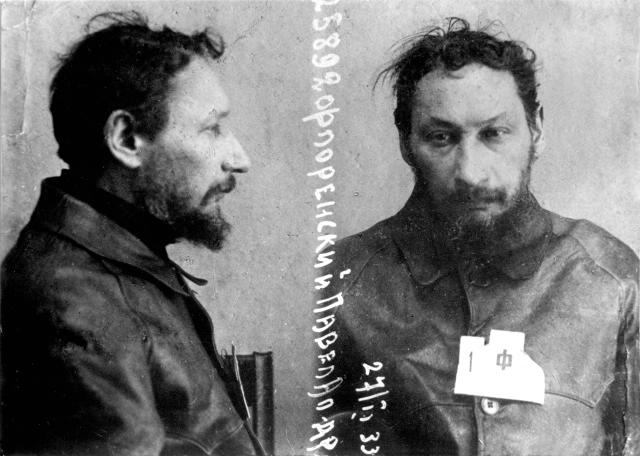
What is the problem with ideologies? Alexey Losev, an early 20th-century Russian philosopher, philologist, and culturologist, was one of the few Orthodox intellectuals who openly criticized Marxism as a modern myth — and managed to survive Stalin’s era without being executed. He was arrested in 1930 and sentenced to ten years of hard labor at the Belomor Canal camp.

In The Dialectics of Myth, Losev exposed the glaring inconsistency in the Bolsheviks’ view of myth and religion. They mocked ancient mythological and religious consciousness as primitive, yet relied heavily on mythological and religious symbols for their own purposes.

To advance their rhetoric in the 1920s, they referred to the counter-revolution as the many-headed Hydra. They called themselves Promethean heroes bringing enlightenment — science, progress, industry — to the masses, in defiance of “divine” or bourgeois authority.

In monumental Soviet art, giant workers, farmers, and soldiers embodied the Titans, while Tsarism, religion, and Western powers were personified as the “dragon.” Lenin’s Mausoleum, too, drew inspiration from ancient monumental tomb architecture, particularly the Egyptian pyramids.

The examples could go on. Losev was despised mostly for making one point unmistakably clear: ideologies cannot exist without myth. Even when they reject myth and religion as primitive or obsolete, they immediately create new myths to replace them. They ridicule other people’s myths, yet remain blind to the ones they are constructing themselves.

Ideologies need myth as they need air. Their power is drawn from it — and they begin to crumble when their myth grows weak. By the beginning of the 20th century, the Russian Orthodox myth had become very weak. As Nikolai Berdyaev writes in The Truth of Orthodoxy:

“Its external weakness and lack of manifestation, its deficiency of outward activity and realization, have been evident to all.”

The Marxists did not come armed with rational arguments; they came with a well-constructed myth. Arguments do not persuade — myths do.

The utopian myth of “We will build a bright future on this earth” replaced the fading myth of “The Kingdom of God after death.”

If you watch old Soviet films capturing the enthusiasm and fervor of the 1920s, you can still feel the pulse of that mythic energy. Wars are never won with weapons; they are won with myths. The more deeply a nation believes in the truth of its own myth, the more righteous it feels in its mission to prove to others that their myth is false.

Where does the power of myth come from? J.R.R. Tolkien writes:

“We have come from God, and inevitably the myths woven by us, though they contain error, will also reflect a splintered fragment of the true light.”

Marxists’ myths are not all wrong. They contain error, but they also reflect a splintered fragment of the true light. That’s why myths are so appealing! That’s why ideologies need them as air. Every ideology — or rather, idolatry — rests on a half-truth, sometimes even an eighty-percent truth. The danger lies not in falsehood, but in mistaking a fragment for the whole.

The moment we recognize our ideology as myth, we cease to believe in it absolutely. It no longer claims the totality of our lives. We don’t have to reject it, but we must fulfill it — bring it to completion. Every partial narrative must be carried toward wholeness. If we reject one, we will instantly create another. When we renounce one idol, we instinctively bow before its opposite.

Healing doesn’t come through rejection but through transcendence — through seeing the partial in light of the Whole. When we look through our idol — our ideology — we begin to recognize it as a glimpse, a splintered fragment of the true light.

Idols thrive on opposition. They grow stronger when attacked, but they cannot endure being seen through. When we look through them “as through a glass, darkly,” they lose their power and become nothing but good dreams. As C.S. Lewis said in Mere Christianity:

“God sent the human race what I call good dreams: I mean those queer stories scattered all through the heathen religions about a god who dies and comes to life again…”


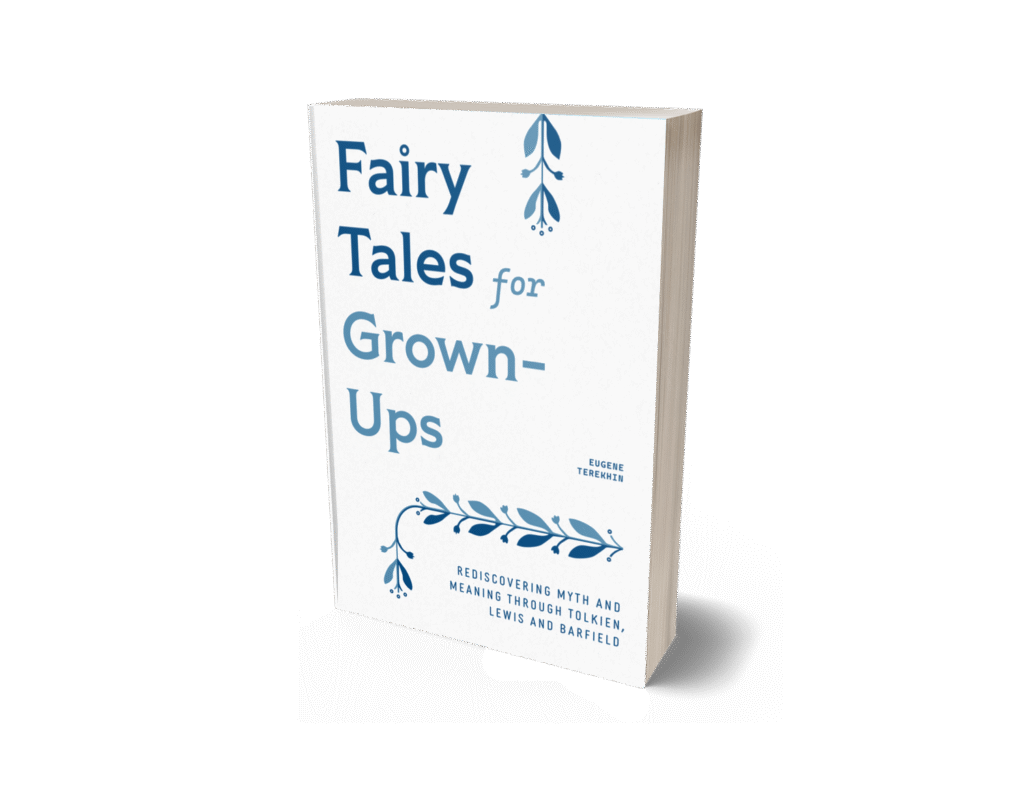
Check out my 4th book in the Mystical Vision of the Inklings series Fairy Tales for Grown-Ups: Rediscovering Myth and Meaning through Tolkien, Lewis, and Barfield

What is the Spiritual Significance of Food?

What is the spiritual significance of food? Physical food is but a shadow. It points — to the real food. Eggs, bread, meat, butter, sauerkraut, turkey, apple pie, wine, and chicken curry are a foretaste of spiritual nourishment. That’s why in so many cultures, taking food has become a sacred ritual.

Tea ceremonies, birthday meals, feasts, festivals — people have always sensed that unless you eat spiritually WHILE you eat physically, you do not really eat. You may feel full, but you remain famished. To eat only physical food is idolatry — separating the image from the reality it foreshadows.

What does it foreshadow?

It foreshadows spiritual food hidden behind every physical phenomenon. Everything — not just food — can become spiritual nourishment if we glimpse the reality behind appearances. Anything in the physical realm can nourish us spiritually.

For example, when you are deeply engaged in something meaningful — like creating, playing, or helping someone — you rarely feel hunger even if you haven’t eaten. Why? What is your “food” when there is no food? Real nourishment is concealed behind EVERYTHING in the physical realm if we only penetrate the phenomena with our spiritual vision.

Curiously, the Greek word for idolεἴδωλον (eidōlon), meaning image, likeness, apparition, or phantom, comes from εἶδος (eidos), meaning form, shape, appearance, or idea — the same root Plato used when speaking of Forms or Ideas, the invisible essences of things.

Eidos — Idea — is derived from the root verb εἴδω (eidō), “to see.” Literally, eidōlon means “a visible form.” An idol is anything visible we refuse to see through — to perceive the Idea, the invisible essence behind phenomena. When our vision is arrested at the level of the “visible form,” it is anti-vision. We are blind.

We never truly see unless we see through. Unless we eidō (see) the Eidos (Idea) behind the formwe perceive only the eidōlon, the idol, an empty image. But when we eidō (see) the Eidos (Idea) behind the visible formwe truly see. Eidōlon becomes an icon. Idols can be redeemed if we see through them.

To see an Idea is to get nourished — with food from above. That’s why Jesus said to his disciples after they brought Him bread:

“I have food to eat that you don’t know about.” — John 4:32

He had just talked to the woman at the well and saw through what was really happening in the spiritual realm AS THEY TALKED. That’s why he didn’t feel hungry. The disciples thought someone had brought Him food, but He had just feasted on the heavenly banquet.

Every time we glimpse Meaning and engage with it, we get nourished. We are not hungry. We have food others don’t know about. We are fed from above. We are not trapped by shapes and apparitions, nor deceived by phantoms. We pursue Eidos — Idea — and participate in the Feast that is unfolding even now.

The Feast is unfolding this very minute. No one is excluded. If we have eyes to see and ears to hear, we are in. As Viktor Frankl poignantly said,

“People have enough to live by but nothing to live for; they have the means but no meaning.”

What is the Purpose of Education?

What is the purpose of education? In the parable of the eagle and the hen, a farmer found an abandoned eagle’s egg on the ground. He carefully picked it up and placed it in the nest of one of his hens.

The egg hatched along with the hen’s own chicks. The eagle chick grew up among the chickens and learned to scratch the ground for worms, cluck, and flutter his wings just enough to jump a few feet off the ground. It fully believed itself to be a chicken.

Years passed. The hen, a good parent and a patient teacher, often noticed that this “ugly chick” would, every now and then, pause in the middle of scratching the ground and suddenly gaze up in the sky as if waiting for something.

“What are you doing?” she would say. “You’re big and need twice as much food as any of the other chicks.”

One day, the eagle chick looked up and saw a magnificent bird soaring high above the fields. Its wings were wide and strong as it swooped gracefully through the blue abyss.

“What is that?” the eagle asked the hen, his heart skipping a beat.

“That’s the eagle,” she replied. “The king of the birds. It belongs to the sky. We belong to the earth.”

Something snapped in the little eagle’s heart, and a cry of ultimate yearning burst out of his chest. He dashed forward, spread his wings, and took to the sky.

The hen looked up, tears trickling down her cheeks, and said, “I taught him how to scratch for worms, but he was unhappy. Now he has left the earth, and he is happy. Even though I don’t understand why, it makes me happy too.”

According to the Italian pedagogue Franco Nimbrini, a good teacher is the one who knows that a child needs a guide to become himself. A Guide is not a teacher; he doesn’t need to say anything; he must simply appear. A good teacher knows that their job is to wait for the appearance of the Guide and get out of the way. The teacher’s ultimate happiness is to see the child soar.

The teacher doesn’t always understand why the child is so happy, but a good teacher steps out of the way so that the Guide may increase. The Guide may not even know he is being followed; he is simply soaring in his own element. And that is enough — the child deeply senses the connection.

A good teacher or parent knows that without the Guide, the child will never be truly happy on this earth. That is the whole point of education as it should be. The Latin educere, from which we derive the word education, consists of the prefix e- (“out of” or “from”) and the root ducere (“to lead” or “to draw”).

The German word for education — Bildung — comes from Bild (“image” or “picture”) and the suffix -ung (“action”). It signifies the act of revealing an image within a person. True education happens only when the Guide appears and draws the image of God out of the child.

A good teacher or parent is waiting for the appearance of the Guide and is overjoyed when he appears. He longs to see the Divine spark igniting in the eyes of the child. He longs to see the miracle of educere — the sudden drawing out of the image of God.

True education is our decreasing so that the Guide may increase. False education is our self-increasing that blocks the Guide from appearing. If we see no spark in our children’s eyes, it means no educere is happening. Something is obscuring their vision of the Guide soaring above.