What is the Symbolism of Sauron’s Lidless Eye?

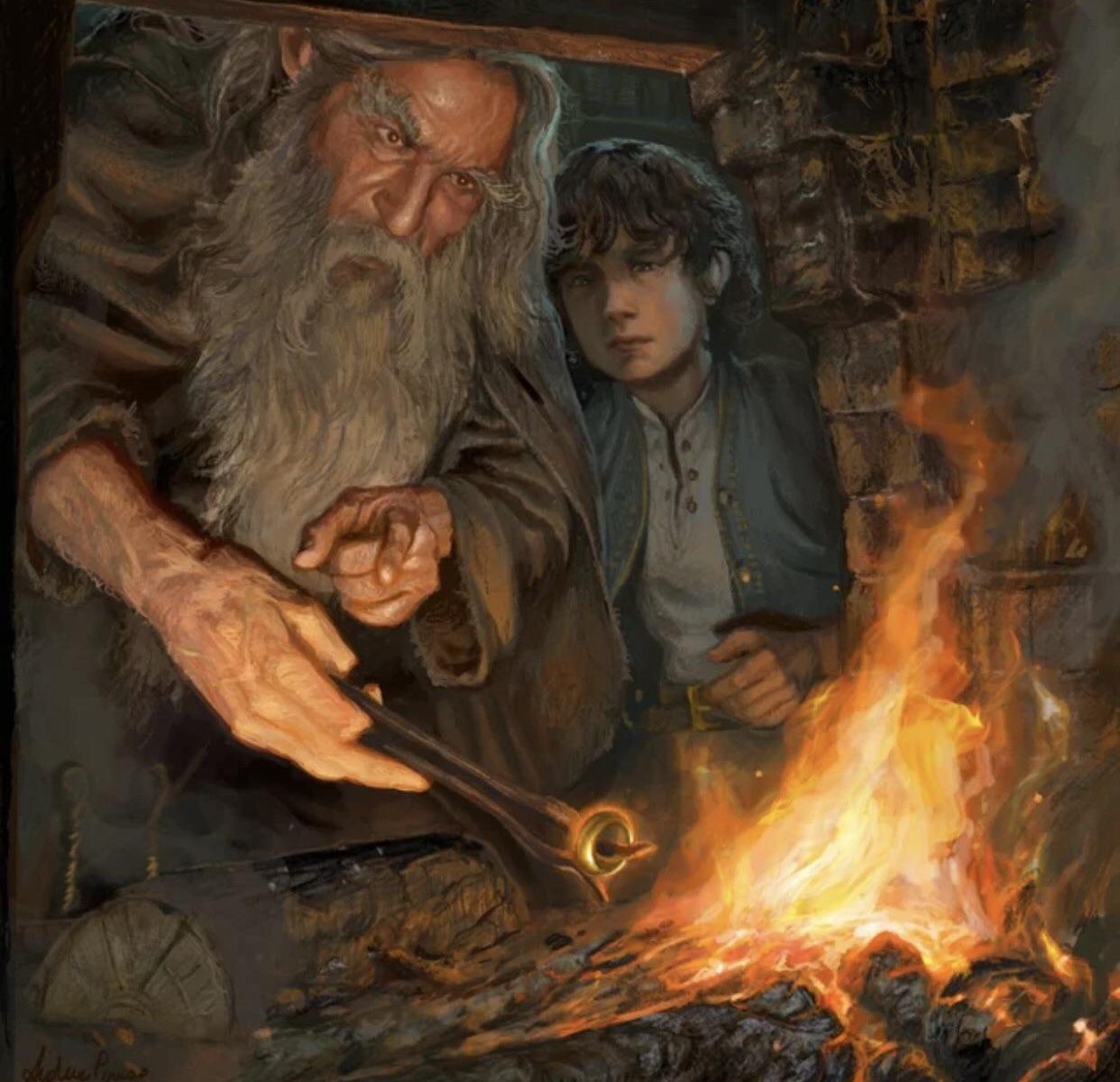
What is the symbolism of Sauron’s lidless eye? According to Gandalf, Sauron can’t help but project his own inner logic onto everyone else.

“For he is very wise, and weighs all things to a nicety in the scales of his malice. But the only measure that he knows is desire, desire for power; and so he judges all hearts. Into his heart the thought will not enter that any will refuse it, that having the Ring we may seek to destroy it. If we seek this, we shall put him out of reckoning.”

He who desires power above all else will never understand the actions of someone who does not. He judges all hearts on the scales of his own malice.

Gandalf, who does not desire power above all else, possesses a different kind of wisdom — the wisdom of folly.

“Well, let folly be our cloak, a veil before the eyes of the Enemy!”

But why is folly a veil before the eyes of the Enemy?

We never see things as they are; we see them as we are. Someone bent on power cannot truly understand someone who rejects a tool for gaining power. In his eyes, such a person is simply foolish.

Who in his right mind would refuse a means of achieving quick and certain success? Only someone who understands the mind of the Enemy. Sauron can see those who desire what he desires. But he cannot see those who reject power in the form of the Ultimate Power Tool.

Those who reject power become invisible to the Lidless Eye. “Folly” is the perfect cloak, hiding us from the Enemy’s gaze. The Lidless Eye is a metaphor for total surveillance.

As we drove through Houston yesterday, my son pointed to a surveillance camera by the side of the road — an ALPR, or automated license plate reader.

“What are they for?” he asked.

“Someone wants more control,” I replied.

“What for?”

“Power. If you can get more power, why wouldn’t you?”

“Yeah. It seems foolish not to.”

“Exactly. We need to become fools if we want to remain unseen by Sauron. He believes everyone is like him — that no one in their right mind would refuse tools designed to maximize power. But this makes us completely visible to the Eye.”

“What makes us invisible?”

“Humility. The forces of spiritual darkness cannot see humility. The less we use their ‘power tools,’ the less visible we become. Our folly becomes our cover — and true wisdom from above.”

Gregory of Nazianzus once wrote about the Tree of the Knowledge of Good and Evil:

“This latter was the Tree of Knowledge; not, however, because it was evil from the beginning… nor was it forbidden because God grudged it to men… But it would have been good if partaken of at the proper time; for the Tree was, according to my theory, Contemplation, which it is only safe for those who have reached maturity of habit to enter upon; but which is not good for those who are still somewhat simple and greedy.” — The Second Oration on Easter

The sin of our forefathers was not that they partook of the fruit, but that they partook of it at the wrong time. God never grudged knowledge to humans, but He withheld it — just like we withhold matches from three-year-olds. He didn’t allow us to touch knowledge before the right time.

Tools are not evil in and of themselves. They become evil when we, in our simplicity and greed, refuse to wait for the “right time.” When we grasp for power, it becomes our undoing. When we wait for it to come at the right time, it becomes an instrument for good.

Power can only be given to the one who doesn’t need it. Ultimately, only a hobbit is strong enough to save the world. When you think you can, you can’t. When you think you can’t, you can.


Read more about Tolkien’s metaphors:

How Do You Conquer the Ego? Dante, Lacan, and the Power of Being Seen

How do you conquer the ego? The French philosopher Jacques Lacan says,

“What determines me, at the most profound level, in the visible, is the gaze that is outside.”

According to Lacan, it is highly curious that human behavior and self-perception drastically change the moment we become aware of being looked at. An outside gaze, when caught, changes us profoundly. No one remains the same when they know they are being seen.

Why?

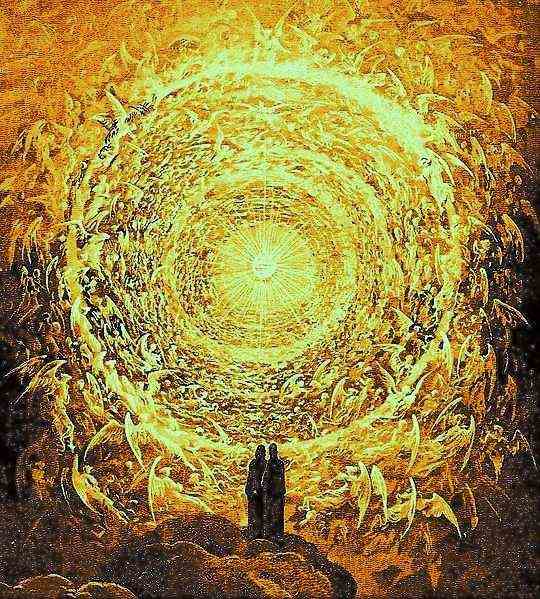
Because we are revealed as human beings only when we are seen. The Gaze is the ultimate revelatory act. Dante says of Beatrice’s eyes in Vita Nuova:

“Whenever and wherever she appeared, by virtue of my hope in her marvelous greeting [gaze], no one could be my enemy; on the contrary, I became possessed by a flame of charity that made me forgive whoever had hurt me, and were someone to ask me any question at that moment, my response would have been, simply, “Love,” my expression clothed in humility.”

Dante had many enemies and yet, the moment he caught her gaze, no one in the world could remain his enemy. Suddenly, in the twinkling of an eye, all inner struggle subsided, and humility arose — without struggle, as a response to the gaze. What Dante saw in that gaze was different than what Petrarch encountered in Laura.

For Petrarch — and many others — their earthly love was a distraction from God. Petrarch’s inner struggle was precisely that Laura competed with God for his heart. For Dante, Beatrice was not a distraction from God but theophany. There was no competition. Through her eyes, God revealed His own gaze.

What happened in that gaze? Suddenly, unexpectedly, Dante felt exalted and humbled at the same time. True humility always arises as an inner response to being seen. False humility is an attempt to bring oneself down without the awareness of being seen.

Such attempts are never successful. In fact, they only inflate the ego further.

True humility is a profound paradox: we feel most humble when we feel most exalted — in the Divine Gaze. When we catch that Gaze, we know we are singled out, made precious, chosen. That Gaze lifts us to the seventh heaven.

At that moment, the ego dies a quiet and happy death. We no longer need to establish or exalt ourselves. We already feel exalted to the highest heights. Unless we are exalted by the Other, we will inevitably attempt to exalt ourselves. The moment we become aware of how we are being looked at, the ego falls silent.

The Gaze humbles us by revealing who we truly are. This is the most humbling experience of all: to discover who we are in the eyes of the Lover. The Gaze humbles by extolling.

C.S. Lewis said:

True humility is not thinking less of yourself: it’s thinking of yourself less.

But it is impossible to think of yourself less without first being exalted by the Gaze. The Gaze lifts us to such heights that all our attempts at self-exaltation suddenly appear absurd. We give them up instinctively. It simply makes no sense to think much of oneself once we become aware of how we are being seen.

The paradox of humility is that it’s the flip side of being exalted — by the loving gaze. People think much of themselves only because they are unaware of being seen. The ego exalts itself precisely when it does not know how greatly it has already been exalted.

It puffs itself up and seeks to grow ever larger until one day — somewhere in the middle of the Ponte Vecchio — it lifts its eyes and is suddenly smitten by how it is being looked at. In that instant, it begins to laugh at its own efforts at self-exaltation.

All human attempts at self-exaltation are ridiculous, because if only we knew how greatly we have already been exalted, we would exclaim with Dante: “I am possessed by a flame of charity,” and we would answer every question with a single word:

Love.

What Does “Little Things Matter” Mean?

What does “little things matter” mean? G.K. Chesterton famously said,

“There are no uninteresting things, only uninterested people.”

The renowned Georgian pedagogue Shalva Amonashvili counts his life in days, not in years. Born in 1931, he knows exactly how many days he has lived. He says when you count days, days become longer. Counting days helps you notice interesting things about your day — not the duration of time.

When you recognize God in little things, you realize there are no trifles. Everything is a tremendous trifle. If God is anywhere, he is everywhere. If we see him at least in some things, we will see him in all things. He is either everywhere or nowhere. If we don’t notice him in little things, we won’t notice him in big things.

Amonashvili plays a game with his students — every time he runs into someone in the corridors of his school, he asks them, “What happened?” The student answers. Fifteen minutes later, he asks them again, “What happened?” The student shrugs his shoulders, “Didn’t you ask me already? What could happen in 15 minutes?”

Amonashvili says, “Something must have happened. You don’t think God was on vacation these 15 minutes, do you? He must have been creating.”

God is in the business of creating tremendous trifles all the time. The more we zoom in the more we see. The word “happen” comes from Middle English happenen, derived from Old Norse “happa”, which means “fortune.” Every time something happens, we are fortunate. It’s a chance to see big things in trifles.

When my friend calls me from Russia to catch up, sometimes it’s hard to start a conversation from scratch. So, I scratch my head, “What has happened since our last talk? Hmm… not much.” But then I tell him little things like the weather, and what I had for breakfast that morning. Suddenly, I see a hummingbird hovering over my wife’s flowers. How fortunate!

The hummingbird reminds me of something I had read about birds recently. Our conversation opens up into something tremendous. There’s a fortune lurking behind every trifle.

“Teach us to count our days, that we may apply our hearts unto wisdom.” Psalm 90:12

G.K. Chesterton opens his Tremendous Trifles with a story of two little boys, Paul and Peter who met a fairy. Paul asked to be turned into a giant so he might stride across continents to Niagara and the Himalayas in an afternoon dinner stroll.

Voila! He was turned into a giant. He stood up and strolled to the Himalayas, but… “he found they were quite small and silly-looking.” Then, he strolled to Niagara, and…

“…he found Niagara it was no bigger than the tap turned on in the bathroom. He wandered round the world for several minutes trying to find something really large and finding everything small, till in sheer boredom he lay down on four or five prairies and fell asleep.”

Peter made the opposite request. He wished to become a pigmy about half an inch high and immediately became one. His small garden suddenly transformed into a huge plain covered with a tall green jungle. He saw gigantic trees in the distance, and even a mountain — a whole wide world full of wonders. He smiled, rose to his feet, and…

“…set out on his adventures across that coloured plain; and he has not come to the end of it yet.”