What Was Wrong with Lord Denethor?

Image Courtesy

What was wrong with Lord Denethor? Denethor, the Stewart of Gondor, was sure he knew the future. He had one of those ancient seeing stones, Palantír. He looked into it regularly and was convinced that the battle against evil was lost. He saw too much to doubt it.

“Why do the fools fly? Better to die sooner than late, for die we must.”

When Gandalf told him to fight Mordor, he got enraged,

“Do you think the eyes of the White Tower are blind? I have seen more than you know.”

He thought he knew beyond a shadow of a doubt what the future held. This “knowledge” drove him insane. The illusion of absolute knowledge is the best recipe for insanity. As Chesterton puts it, the mind of an insane person always “moves in a perfect but narrow circle.” The function of the Palantír was to draw the person into that narrow circle and lock him in it.

“If you or I were dealing with a mind that was growing morbid, we should be chiefly concerned not so much to give it arguments as to give it air, to convince it that there was something cleaner and cooler outside the suffocation of a single argument.” G.K. Chesterton, Orthodoxy

Denethor believed that Palantir was broadening his horizons but in reality, it was narrowing his field of vision. It showed only the things that aligned with the will of the one who ruled over the seeing stones. Slowly, Denethor’s “small circle of thought” became so small that he started suffocating in it.

Gandalf came to Gondor as a gust of fresh air and said, “Fight.” You don’t know the future beyond a shadow of a doubt. No one does.

“Despair is only for those who see the end beyond all doubt. We do not.”

Who knows what the next day will bring? You never know what forces are at work in this particular circumstance of your life. All you need to do is to recognize the necessity and take the next step.

“There are other forces at work in this world, Frodo, besides that of evil.”

What do we know about the future? Nothing. To recognize it is wisdom. This realization helped Chuck, Tom Hanks’s hero in Cast Away, to remain sane on his uninhabited island for four years. After being rescued, he told his friend what helped him to go on day after day without any hope of getting out of this prison. He said,

“I just continued living, breathing, until one day, everything changed. The tide gave me a chance… So I know what I will do now. I will continue to live because tomorrow will be a new day, and who knows what it will bring?”

Day after day, he continued living not knowing… until one day, the tide brought him a piece of plastic that he turned into a sail. Now he could get over the huge surf waves.

That’s exactly what Gandalf said to Aragorn, Gimly, and Legolas when they met him in the woods after his unexpected resurrection,

“I come back to you now at the turn of the tide.”

We never know what the tide will bring today. That’s why we continue living and breathing. It is not folly, as Denethor thought. It is wisdom. We don’t see the end. That’s why we are waiting for the turn of the tide.


What is the Meaning of Aslan’s Name?

Image Courtesy

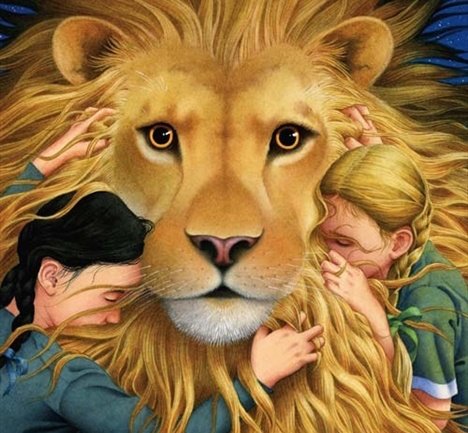
What is the meaning of Aslan’s name in Narnia? I have always found it curious that the name of Aslan caused such different reactions in the Pevensie children. In fact, when I first read that passage, something jumped in me too:

“At the name of Aslan each one of the children felt something jump in its inside. Peter felt suddenly brave and adventurous. Susan felt as if some delicious smell or some delightful strain of music had just floated by her. And Lucy got the feeling you have when you wake up in the morning and realize that it is the beginning of the holidays or the beginning of summer.”

There was something relatable about it. Surprisingly, there was something relatable even in Edmund’s reaction to the name.

“But Edmund felt a sensation of mysterious horror.”

It felt like some judgment was going on. Not externally but internally. The name of Aslan was the ultimate revealer of what was in a person. It amplified the contents of your heart. If there was light in it, you could almost touch it. If there was darkness there, you couldn’t help but feel horror.

When I read John 3:19, it all came together:

“This is the judgment, that the light has come into the world, and men loved the darkness rather than the light.” 

What is the meaning of Aslan’s name in Narnia? When the light comes, it reveals what is. There’s nothing else to judge. Judgment is internal. It jumps from within us every moment we encounter the Light. We either delight in the light or hide from it. Depending on the state of my consciousness in the moment, the Light will either make me lighter or heavier.

The same curious thing happened in The Lord of the Rings when the company entered Lothlórien. The effect of entering the realm of the Lady was such that all the company felt the presence of some inexplicable magic.

For some, it was a delight. For others, torment. Tolkien seems to suggest that the whole land was Galadriel’s mirror — not just the stone mirror itself. As the fellowship walked through the enchanted wood, they saw their secret thoughts and desires revealed as if in a mirror.

Some liked it; others hated it. But they couldn’t hide from it. They stepped into a land of the Last Judgement unfolding 24/7. Galadriel wasn’t the Judge — she was the revealer of what was in each person’s heart. The Judgement was internal, not external.

For Boromir it was torment. For Aragorn, it was a delight. Boromir said,

“It is said that few come out who once go in; and of that few none have escaped unscathed.’ ‘Say not unscathed, but if you say unchanged, then maybe you will speak the truth,’ said Aragorn.”

In the final analysis, we are all judged by how we respond to our encounter with the Ultimate Beauty. For some, it is an eternal delight. For some, eternal torment. If you come with a pure heart, it is a delight. If you come with an idol, it is a curse.

The Light is always sweet for the one who allows it in. It is a horror to the one who doesn’t. The encounter with the Ultimate Beauty can be either heaven or hell — depending on what is inside one’s heart already.